




Why Every Trader Must Start with TradingView Demo Trading
There is no doubt that getting involved with live trading without prior practice would be like getting behind the wheel of a Formula 1 car after merely viewing YouTube videos. You think you know what you are doing, but soon enough, the market will show you that you have no idea.
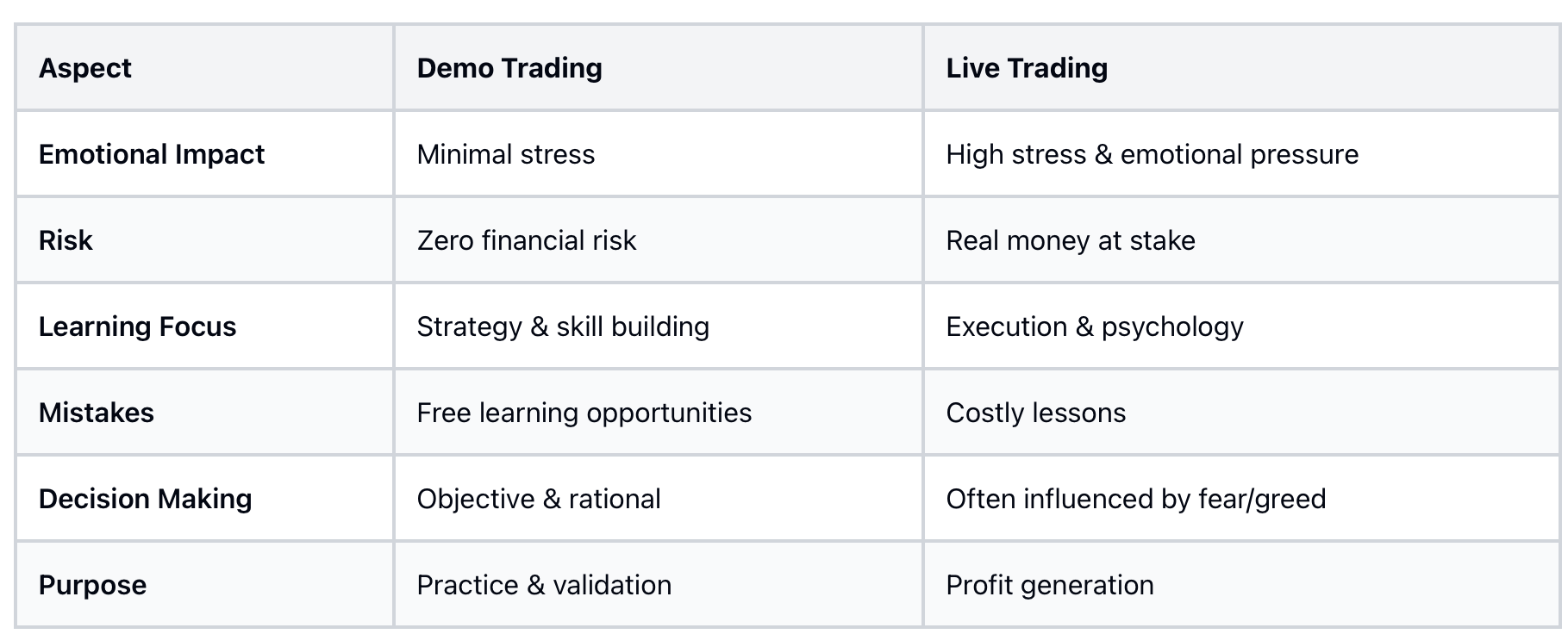
Today, millions of traders around the world utilise TradingView as their main charting platform to chart their trades. No matter if you are solely interested in forex pairs, crypto oscillations, shares of stock, or indexes, it is the preferred charting tool for the majority of professionals and novice traders alike. However, while it is nice to have access to the best charts available, it is pointless if you do not know how to appropriately utilise them. This is why demo trading (also referred to as Paper Trading) exists.
The purpose of demo trading is to enable you to have an opportunity to practice and develop your trading strategies in a setting where you do not have to risk any of your hard-earned capital. It gives you the ability to discover market patterns and make trading mistakes without suffering a monetary loss. Basically, this is your trading laboratory.
Professional traders understand this concept; the majority of hedge funds require their trainees to conduct at least 20 demo trade reviews per week before they are allowed access to any real capital.
The same concept applies to high school students; they understand that they should practice on a simulator before they get on the actual race track. Why wouldn't you practice on a simulator before competing on the real thing?
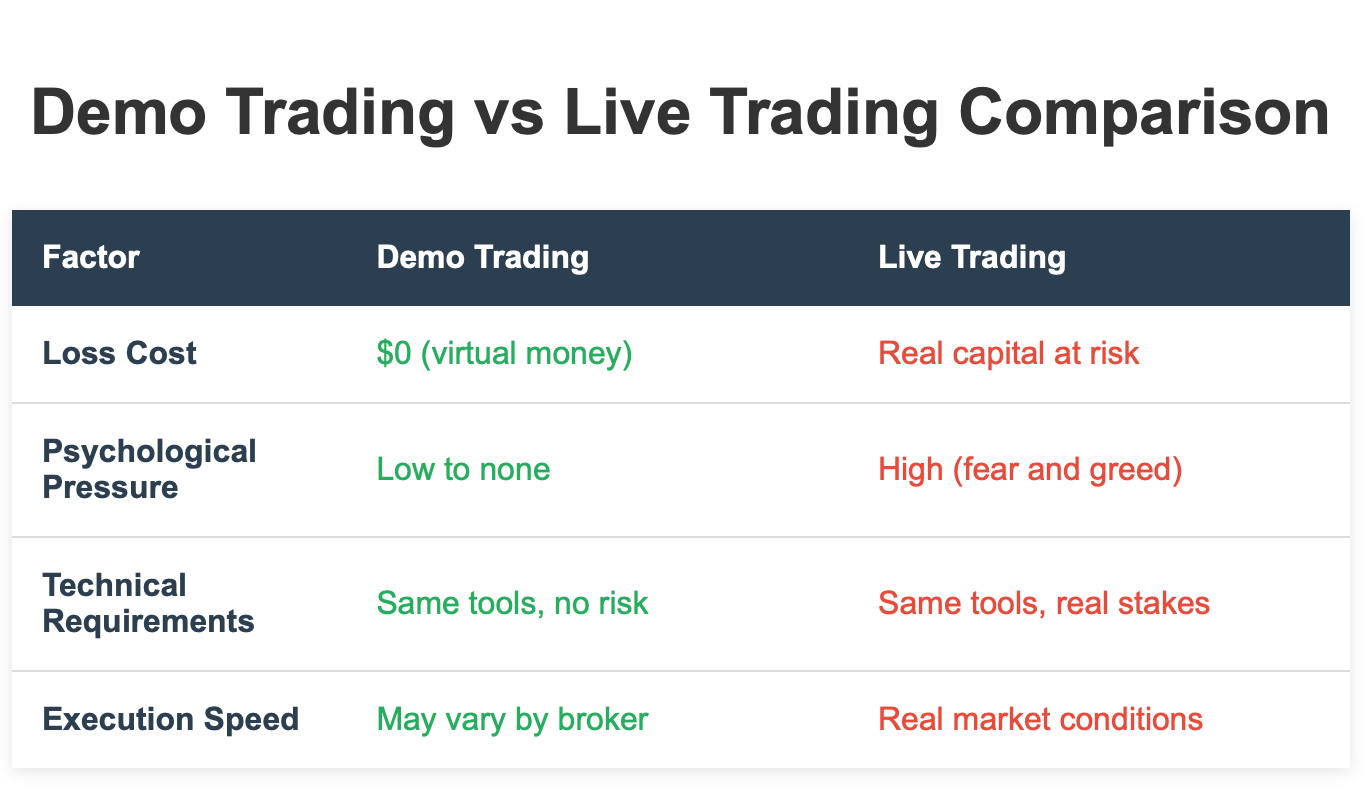
What many beginner traders may overlook is the fact that there is a massive difference between the demo trading accounts offered by different brokers on TradingView; all demo trading accounts are alike. Depending on which broker you select to use for your demo account will have a huge impact on the type of training you receive. Certain brokers provide true-to-form live quotes with realistic trade execution times; others provide a fake demo environment that is essentially an online game instead of a realistic demo trading environment.
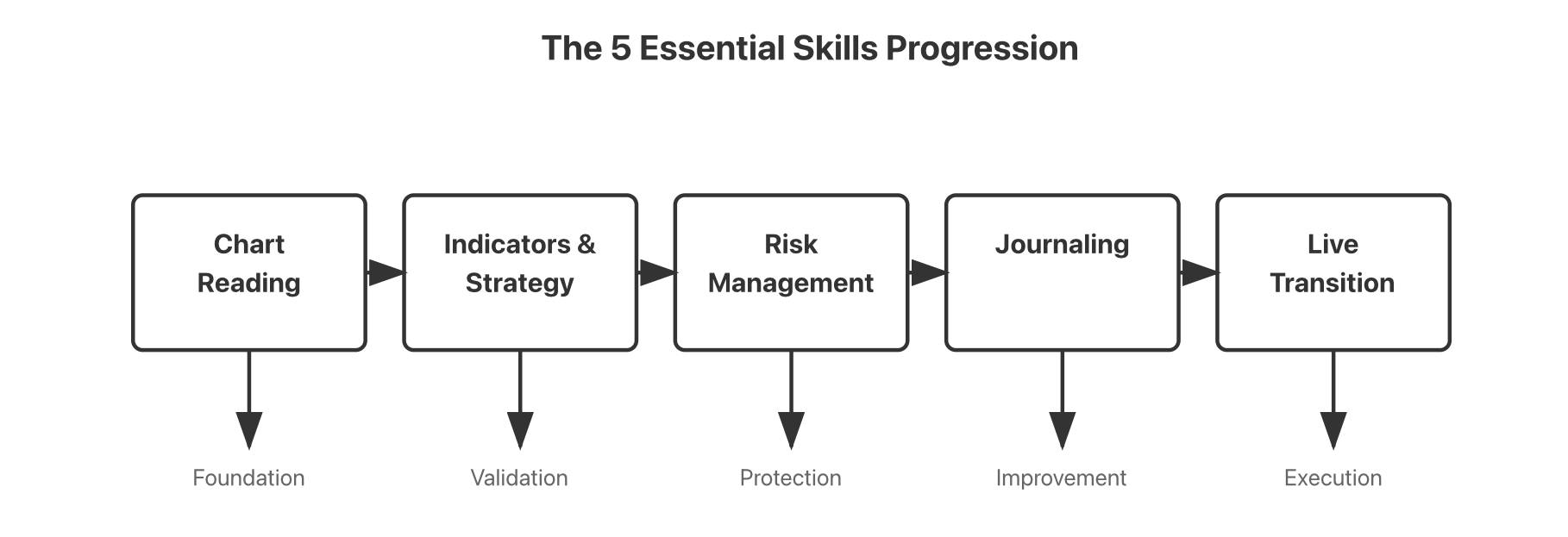
The following information outlines five important skills to learn from demo trading prior to going live. It also provides insight on how to select a good forex broker who has a demo account that provides an accurate duplicate of what trading will be when you are ready to go live.
TradingView Main Features:
-
Real-time market data across multiple asset classes
-
Advanced charting tools and indicators
-
Paper Trading mode for risk-free practice
-
Social community and strategy sharing
Ray Dalio, founder of Bridgewater Associates, has always emphasised that any strategy must be tested thoroughly in a risk-free environment before real money touches it. TradingView demo trading is the safest and most efficient way to build that foundation.
Key Skill 1: Mastering Chart Reading
Understanding chart patterns is the foundation of successful trading. Without the ability to read charts, all other aspects of the trading process will eventually fail. Most traders begin their trading journey by looking for high-potential trade opportunities, but they frequently overlook the importance of understanding price behaviour. This is a fundamental mistake.
Understanding price structure is essential to becoming a successful trader. Price structure refers to the movement of prices over time, including identifying where trends are moving, where price support and resistance reside, and how volume can establish or negate price movement. TradingView provides the necessary analytical tools (i.e., trend lines, horizontal lines, moving averages, etc.) required to analyse market price activity. The real question is whether or not you possess the analytical knowledge to successfully use such tools.
For example, if you are observing AUD/USD on the daily chart, you might have seen that the price has hit the same support level three times over the last 30 days. These three hits of support were not the result of random occurrences; rather, they signify potential resilience for the AUD/USD currency pair.
Similarly, when you evaluate the strength of a rebound, professional traders will analyse historical data on price structural behaviour and compare this information to their predictions regarding price action. To illustrate, you could use an analogy from high school: "When a step is unstable, you will fall." Price suffers from the same type of risk as it is moved along by the forces of supply and demand.
Trading is an art, and trading depends on reading charts properly. Reading a chart in demo trading allows you to get rid of the emotional noise that comes along with actual trading. You have a much clearer view of the actual movement on your chart, rather than seeing it through your hopes of what you want it to do.
Most of the demo accounts that are offered by brokers on TradingView will allow you to have live quotes. Practising your chart reading this way will allow you to practice under conditions that are closer to a real trader. This means that when you make the shift to trading with your own money, the transition should be much smoother.
Common Patterns To Practice Chart Reading:
-
Head And Shoulders - Reversal pattern
-
Double Bottom/Top - Signalling Trend Exhaustion
-
Flags And Pennants - Continuation patterns
-
Engulfing Candles - Signalling Trend Shifts
Example trend breakout for ETH/USD. Before the breakout of ETH/USD, the coin had been trading in a very tight range between $1,800 and $1,850 for quite some time. As the price consolidated, the volume started to taper off. A reduction in volume is typically seen as a good indicator that the price is going to make a move soon.
The breakout itself was below $1,850, but the volume that came with it was significant and gave traders confirmation that the price had broken the range upwards. If you had practised spotting these setups in demo mode, then you would have been ready for them when they became a reality.
Reading charts may not be the sexiest part of being a trader; however, it is the most fundamental part of building any profitable trading strategy. Therefore, if you dedicate your time and energy to perfecting this skill in demo mode, then you may thank yourself down the road.
Key Skill 2: Indicators & Strategy Validation
Indicators on your car's dashboard are essential; however, they simply provide insights for making the best decisions possible. Just like when you know your car has low gas, you'll need to refuel; likewise, beginner traders either completely disregard indicators or rely too much on their readings without critically evaluating whether or not they are improving their performance.
In other words, it is much easier to find a platform like TradingView and add an indicator to your charts, but the true skill of being able to integrate indicators into your trading plan successfully requires learning how to validate your trading strategies before incorporating them into your routine.
By validating your strategy through back-testing on historical data sets, running demo trades, and recording your results. Pine Script, which is only available on TradingView, will automate the process of back-testing your trading plans, and Table Display allows you to quickly see how multiple indicators are working together, as well as to perform an analysis at multiple timeframes to verify that they are providing you with the proper trade signals.
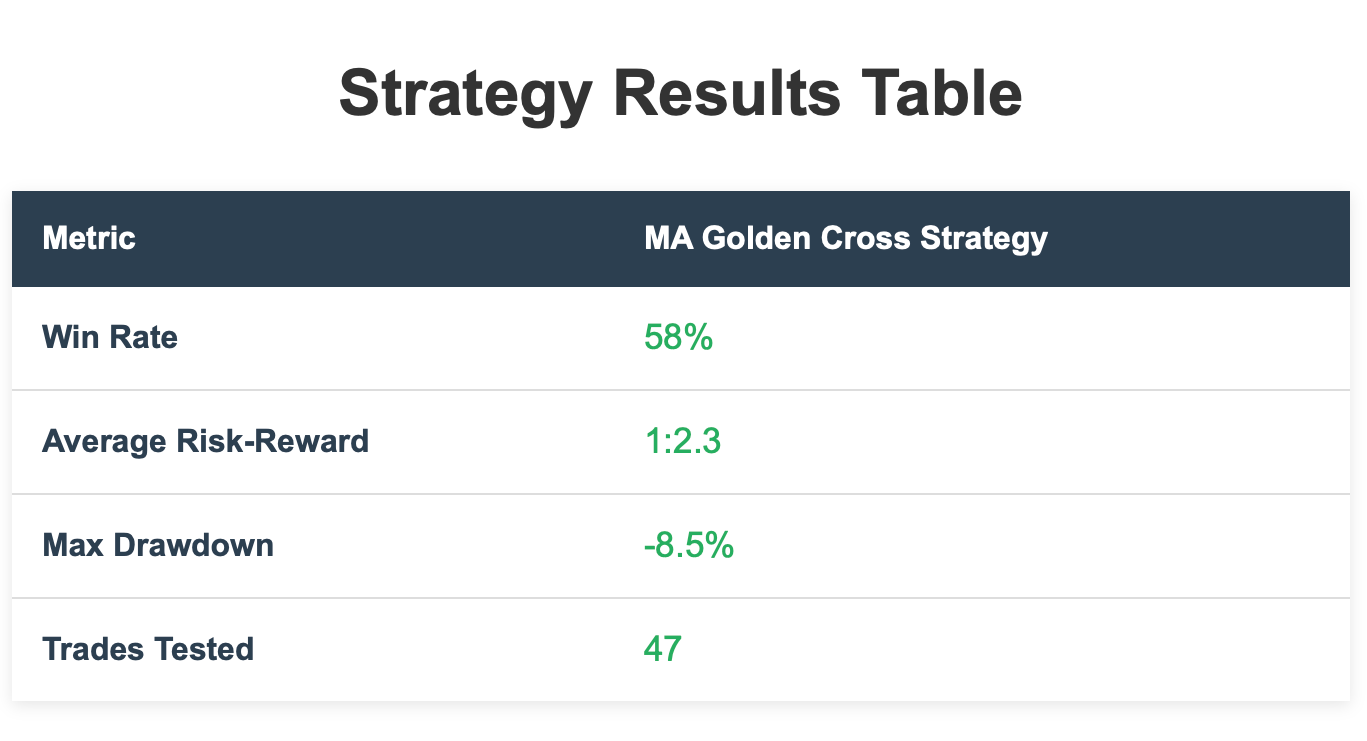
Let’s take an example of testing the EUR/USD trend following strategy using MA50/MA200 crossovers (signals).
So first, you would backtest your EUR/USD based on the above-mentioned signals on TradingView for a specified amount of time. Next, after sufficient backtesting, you would demo trade this strategy and track your win rate, risk-reward ratios and maximum drawdowns for at least 2-3 weeks; once you have the above data and statistics that show the strategy is working consistently, then you can go live.
For example, a high school student could also test various strategies for studying for exams before the exam.
Demo trading is simply testing out your methods (strategies) to see if they yield a positive outcome/testing.
This is also where brokers that provide demo accounts via TradingView (and who have their demo accounts match your brokers’ order execution parameters) are necessary to provide the most accurate result. Example: When you use a demo account provided by a broker, and they have unrealistic fill times or lag between your trade entry and the actual order fill for your order execution parameters, your testing will not yield any valid results when transferring your strategy to live trading.
As an example of the above, in early 2023, the 50-day MA for Bitcoin crossed above the 200-day MA at approximately $23000. Traders who sampled/demo traded this buy signal would have noted that this buy signal will usually be followed by significant upward movement, typically between 15 and 20 per cent. Because these traders tested the MA cross drink and confirmed success before executing live trades, they could enter into a live trade with confidence in their strategy.
The bottom line: strategies must be validated in a demo environment before you risk real money. TradingView gives you the tools; you just need to put in the work.
Key Skill 3: Risk & Position Management
You might possess a well-defined trading strategy, but if you do not practice adequate risk management, your account will eventually be wiped out. This is not hyperbole; it is the leading cause of trading failure among traders.
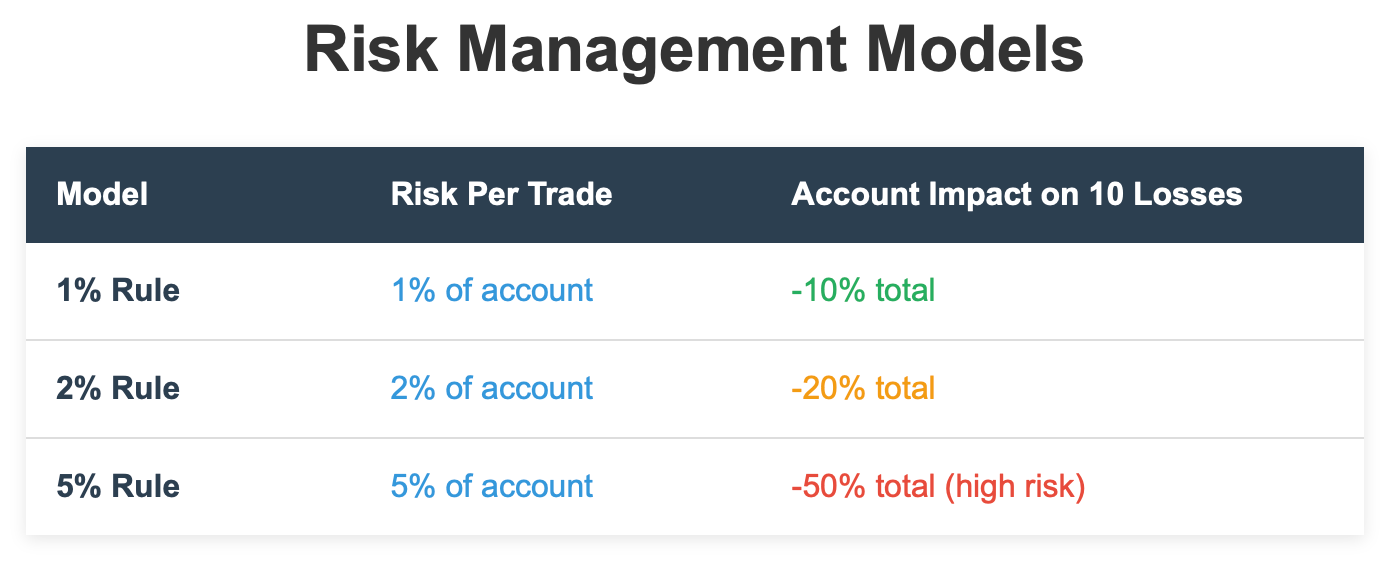
Risk management consists of three components: the amount you are willing to lose on a single trade (typically between 1-2% of your account balance), placing stop losses in advance of entering a trade, and knowing your maximum drawdown limits. Position sizing refers to how to apply the above risk management principles mathematically to determine how many lots, shares, or contracts to buy based on your parameters.
Some hedge fund managers stick to the 1% rule. They will never risk more than 1% of their total capital on one trade, regardless of how perfect the entry signals may appear. A good analogy for a high school student learning to trade is to think of it as not spending the entire time allowed for your exam answering the first question. You want to allocate your time and effort to several opportunities, rather than concentrating all on one.
The demo trading environment from TradingView is an excellent example of how an environment to practice risk management should look; since there are no financial ramifications when testing position sizes, you can test these position size models indefinitely to figure out which size works best for you. Because of the lower level of psychological pressure present in demo trading, you can analyse your decisions more objectively.
For instance, did I take profit too early, or did I risk a high amount on a trade with a low probability of success? It is better to learn these things during demo trading rather than live trading.
Further enhancing your practice of risk management through TradingView is the fact that you can practice with realistic data related to order execution and slippage through brokers that offer demo accounts via TradingView. When using these brokers, you will learn how your trades will be filled, how spreads increase during news announcements, and how extreme market fluctuations will cause slippage of your stop loss orders. This type of risk management training will prepare you to trade under similar conditions of live trading.
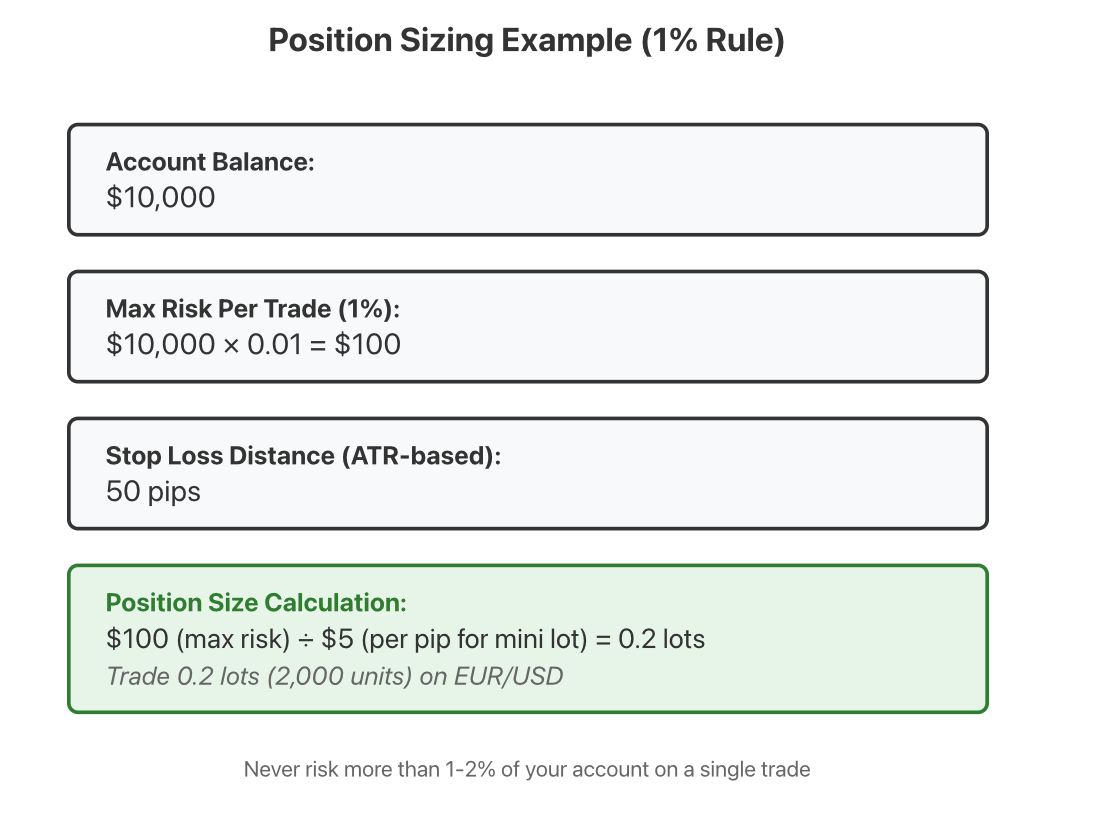
Example of Position Sizing using the Average True Range (ATR) indicator: Assume you’re currently trading EUR/USD with a trading account value of $10,000 using the 1% rule, i.e., your maximum allowable risk per trade equals $100. Based on the ATR, you decide to use 50 pips as the maximum distance for your Stop Loss placement; thus, you calculate your position sizing as follows: Utilise Your Total Maximum Allowable Risk ($100) divided by the number of pips in Mini Lot ($5 per pip) = 0.2 lots. TradingView offers a Demo Account where you can practice these calculations multiple times until you’ve mastered them.
Controlling your risk is far more significant than placing an ideal trade entry point. The Demo account is the safest way to develop this skill.
Key Skill 4: Journaling & Performance Review
It's an uncomfortable but true fact that many unsuccessful traders choose to ignore their trading journal. Instead of admitting their mistakes and learning from their losses, they attribute their losing trades to "bad luck." Profitable traders, on the other hand, accept the need to analyse their trades and take steps toward improving their performance.
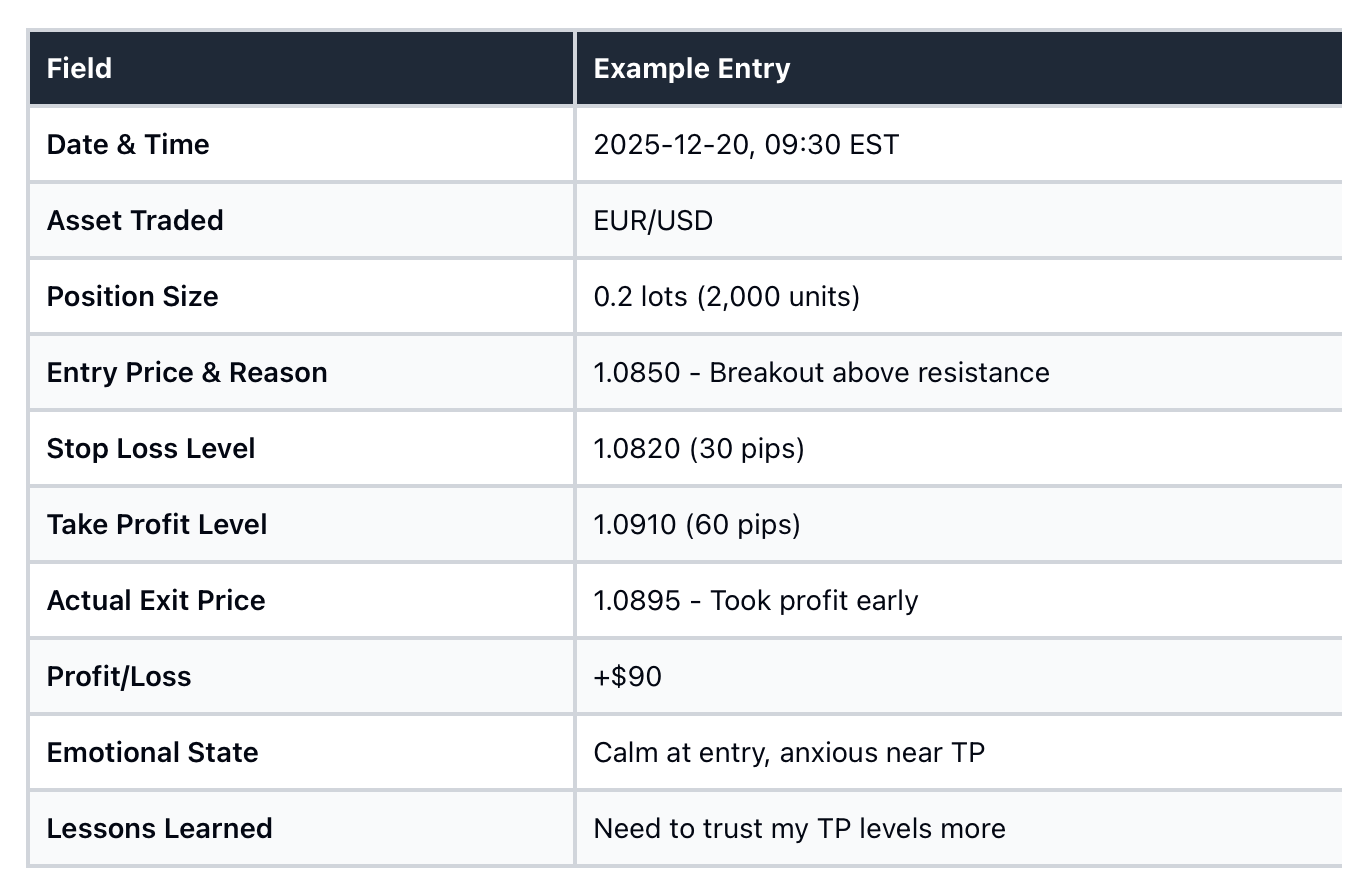
Having a trading journal enables you to keep track of every decision that you make: either the reasons for entering a position, the reasons for exiting a position, how you feel during your trade, and whether or not you were successful. Over time, as you continue to log and review your demo trades, patterns will begin to emerge in your journal, revealing your strengths and weaknesses- things that you would not have known simply by reviewing the individual trades. Perhaps you tend to have great success identifying trends, but struggle with when to enter the trade. Maybe you cut your profits too quickly, or you habitually overtrade on Fridays. You will not be able to determine if any of these statements are true unless you have been logging your demo trades.
Although TradingView does not provide a built-in journal, it allows for easy integration with various external platforms such as Notion, Excel, Google Sheets, or sophisticated solutions like Edgewonk. The key to keeping good records is consistency- if you log every demo trade as if it were real money, you will develop a habit that will assist you in becoming a more profitable trader.
As a professional example, one trader conducted an after-action review of their last 100 demo trades. They learned that their breakout trades had a 35% success rate, but their mean-reversion trades had a 62% success rate. Using this data, they were able to pivot away from the breakout strategy and focus on mean-reversion strategies that yielded better results.
For a high school student, think of it like tracking exam mistakes. The more you document and review, the fewer times you repeat the same errors.
Trading Journal Template:
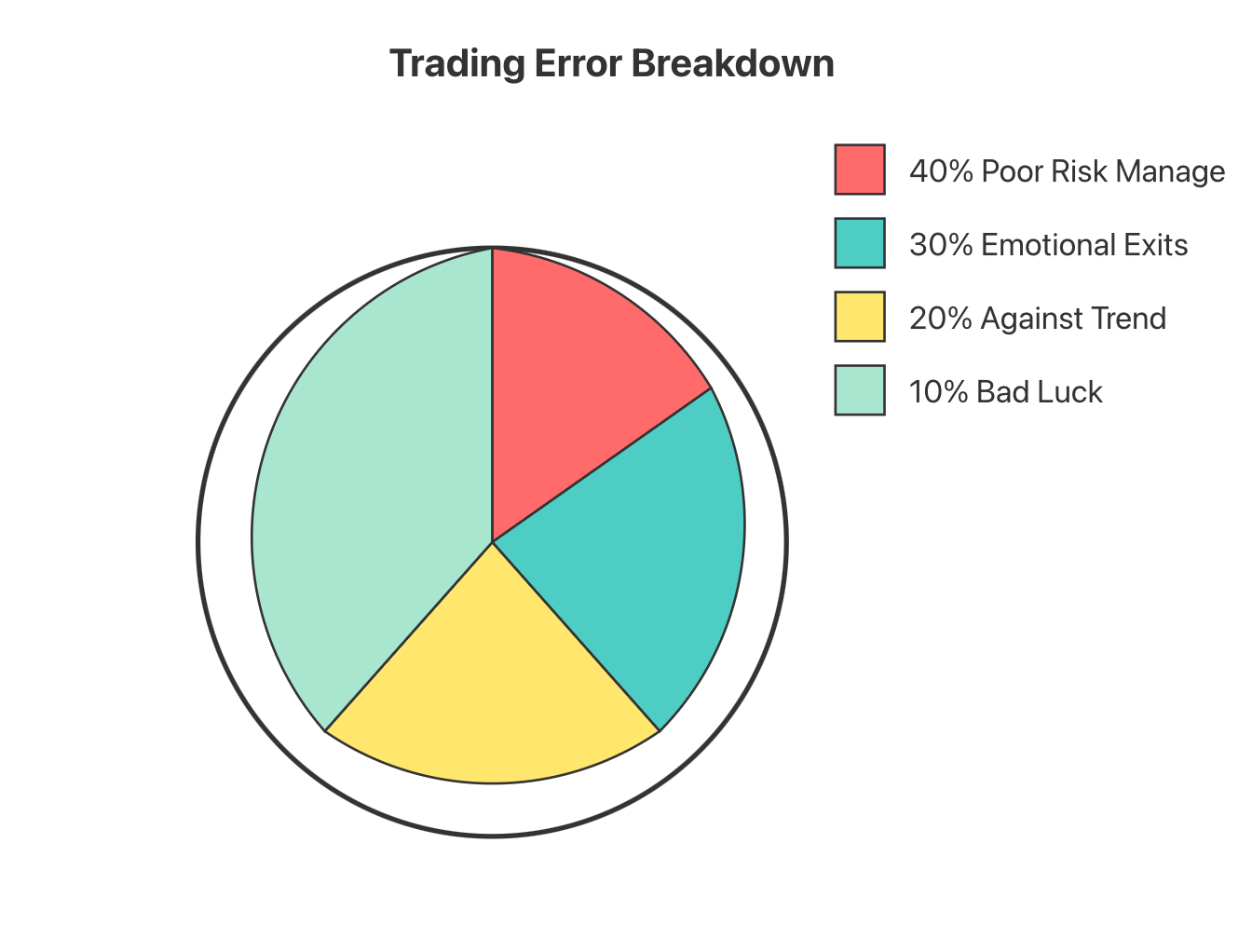
Error Type Analysis: After three months of journaling, a trader might discover:
-
40% of losses come from poor risk management
-
30% from emotional exits (fear or greed)
-
20% from entering against the trend
-
10% from genuine bad luck
That breakdown tells you exactly where to improve.
One case study showed a trader increasing their win rate from 40% to 55% over three months simply by reviewing their trades weekly and eliminating repetitive mistakes. That's the power of journaling.
Reviewing trades turns subjective feelings into objective data. That's how you quantify and improve your trading skills systematically.
Key Skill 5: Transition from Demo to Live Trading
You have been smashing it on your demo account for several weeks, and now you have a great win rate with excellent risk management and feel good about yourself. So, are you ready to jump into the real world of trading? Probably not yet.
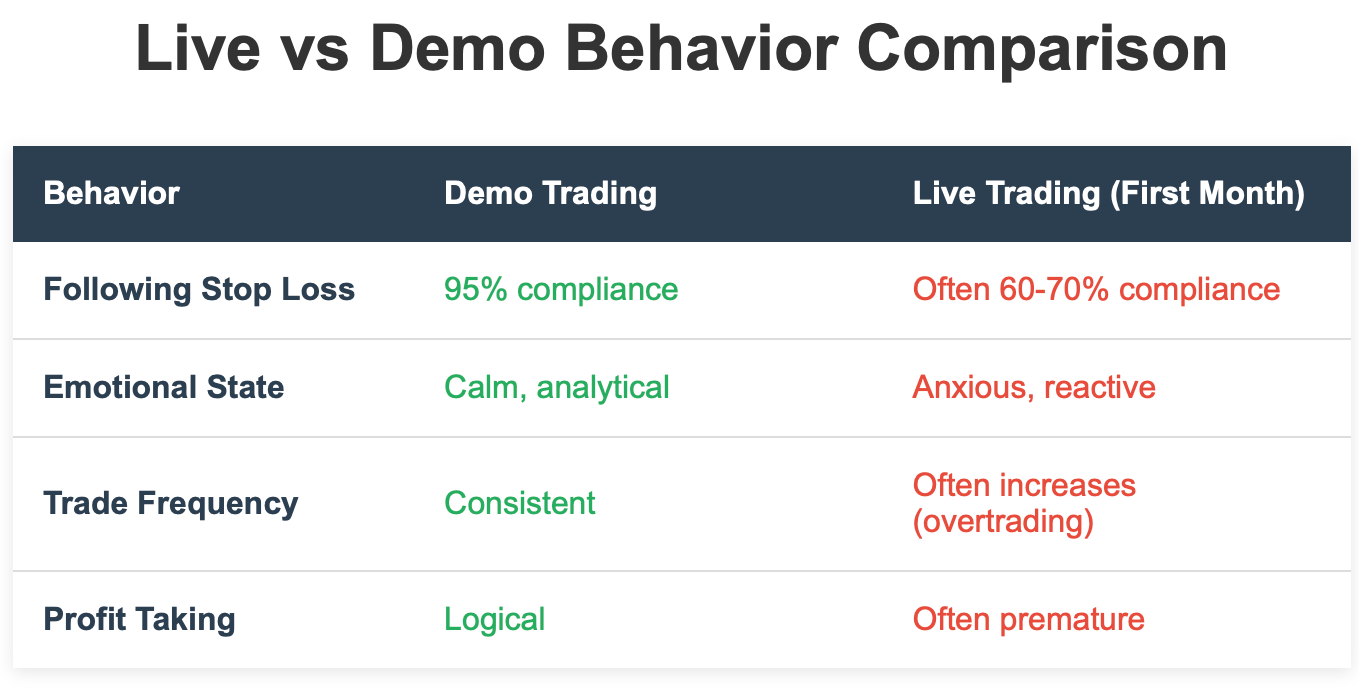
Most new traders fail when they move from demo trading to live trading because trading with real money brings out the emotional side of trading that demo trading cannot provide. Two major emotions that come into play when trading with real money are fear and greed, and the stress of losing money adds a psychological component to the trading process that is not present in demo trading.
There are several indicators of when you are ready for live trading:
-
Have you demonstrated consistent profitability in demo trading for at least 6-8 weeks?
-
Do you always follow your stop losses without exception?
-
Have you developed a mature review process, and do you utilise it?
-
Do you understand that you will feel different when you trade live?
The transition to live trading can be a difficult one for many new traders. They are often nervous and hesitant, fear losing money, and close out winning trades too soon, and overtrade to try to make up for their previous success in demo trading.
The ideal strategy for success is to take things slowly. You may have been practising with $10,000, but that doesn't mean you should trade with the same amount when you go live. Instead, consider starting small with around $200-$500. It is important to find out how you will react emotionally to losing. By using the live accounts only for strategies you're sure of, you can test new strategies on your demo account until you've found one or more that work for you.
When choosing to use a broker with demo accounts on TradingView that closely replicate the conditions of your live trade, you will find that they will help to transition you into live trading with a lot less shock and confusion than if you only had your income from demo accounts to compare with. Your demo account will provide you with a good preview of what live trading will be like, with regard to execution, spreads, and slippage, thus reducing the number of surprises you may experience when transitioning into live trading.
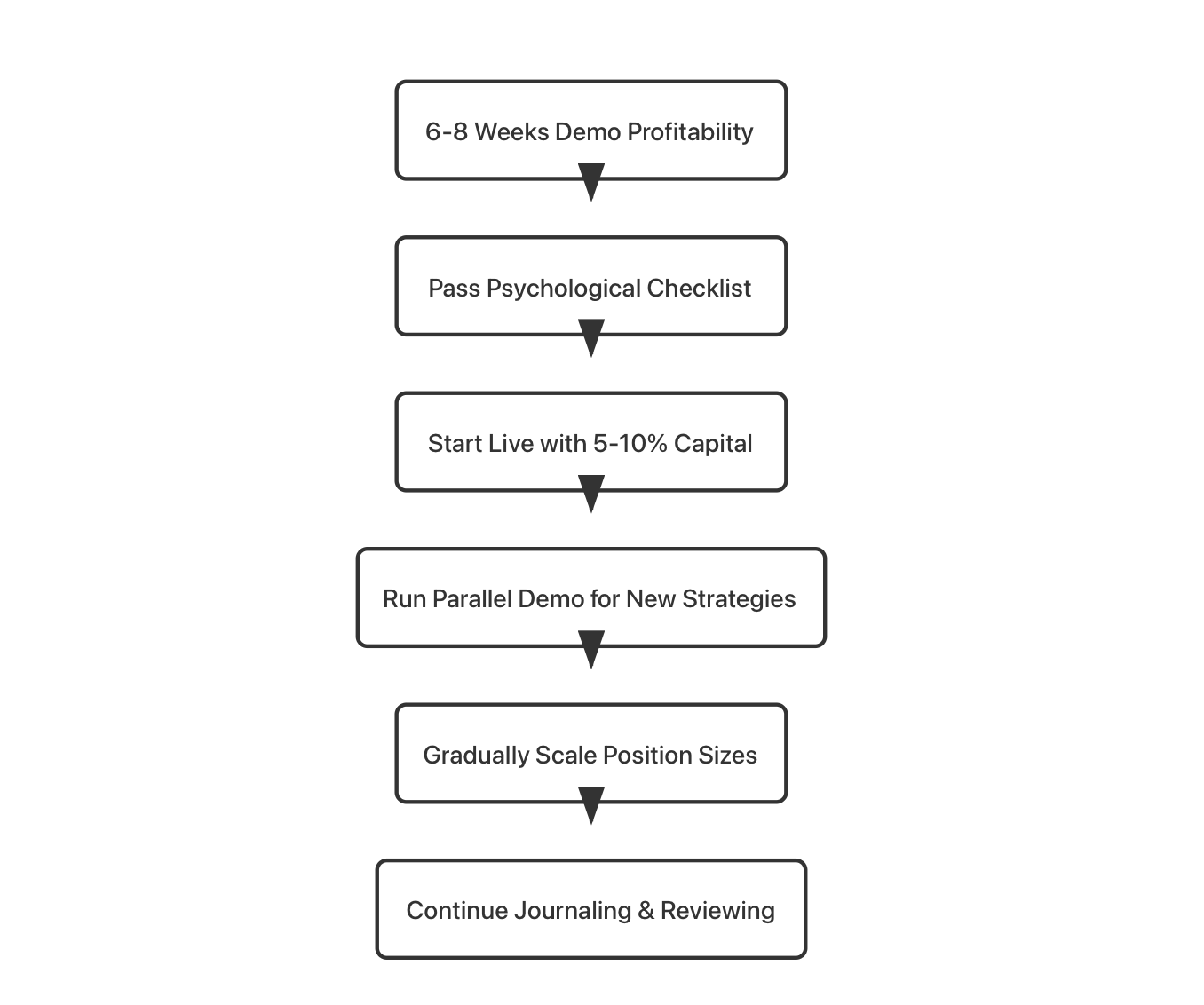
Demo-to-Live Transition Flowchart:
-
Achieve 6-8 weeks of demo profitability
-
Pass the psychological readiness checklist
-
Start live with 5-10% of the intended capital
-
Run parallel demo for new strategies
-
Gradually scale position sizes
-
Continue journaling and reviewing
After three months of demo practice, one beginner has started trading live with $200. The result of their first week was $15 in profit, $22 in loss, $18 in profit, and $8 in loss, resulting in a small net loss overall. However, the biggest victory is that this beginner stuck to their trading plan, realised that the emotional and physical sensations of live trading are much different from demo trading, and they did not blow up their trading account. This is a very successful transition to live trading.
The processes of live trading are not difficult; the difficulty comes from controlling your psychological response to the live market. Therefore, it would make sense to approach the transition from demo to live trading with gradual, intentional, and responsible progression.
How to Choose Brokers That Offer Demo Accounts on TradingView
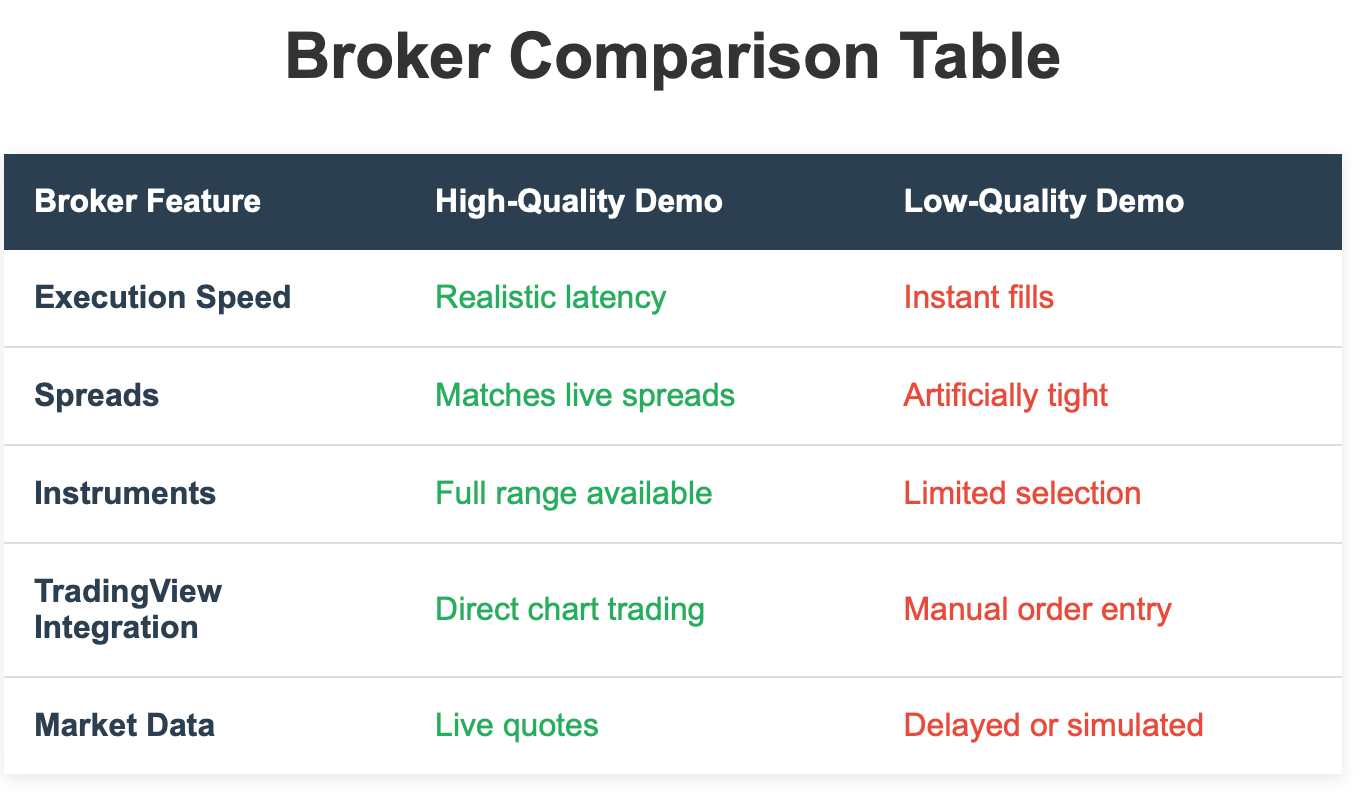
When it comes to demo accounts, they are not all the same. Some brokers that offer demo accounts on TradingView will provide you with realistic execution speeds, tight spreads, and access to live market data. Others create a fake trading environment that will leave you scratching your head, wondering why your live trades never act like that.
The demo experience you have will greatly affect how prepared you will be when you go live. If your demo brokerage has impossible fills, a delayed quote feed, or a small selection of instruments, then you’re essentially practising in a bubble that soon breaks when you finally go live.
Here's what varies between brokers:
-
Execution speed (instant fills vs realistic latency)
-
Spreads and fees (some demos show zero spread, which is misleading)
-
Available instruments (forex, stocks, crypto, indices, commodities)
-
Direct TradingView integration (can you place orders directly from charts?)
-
Real-market-data demo accounts (are you seeing actual market conditions?)
Common Types of Brokers Supporting TradingView:
-
Forex brokers (OANDA, FXCM, FXOpen)
-
CFD brokers (IG, Pepperstone)
-
Crypto exchanges (some support TradingView integration)
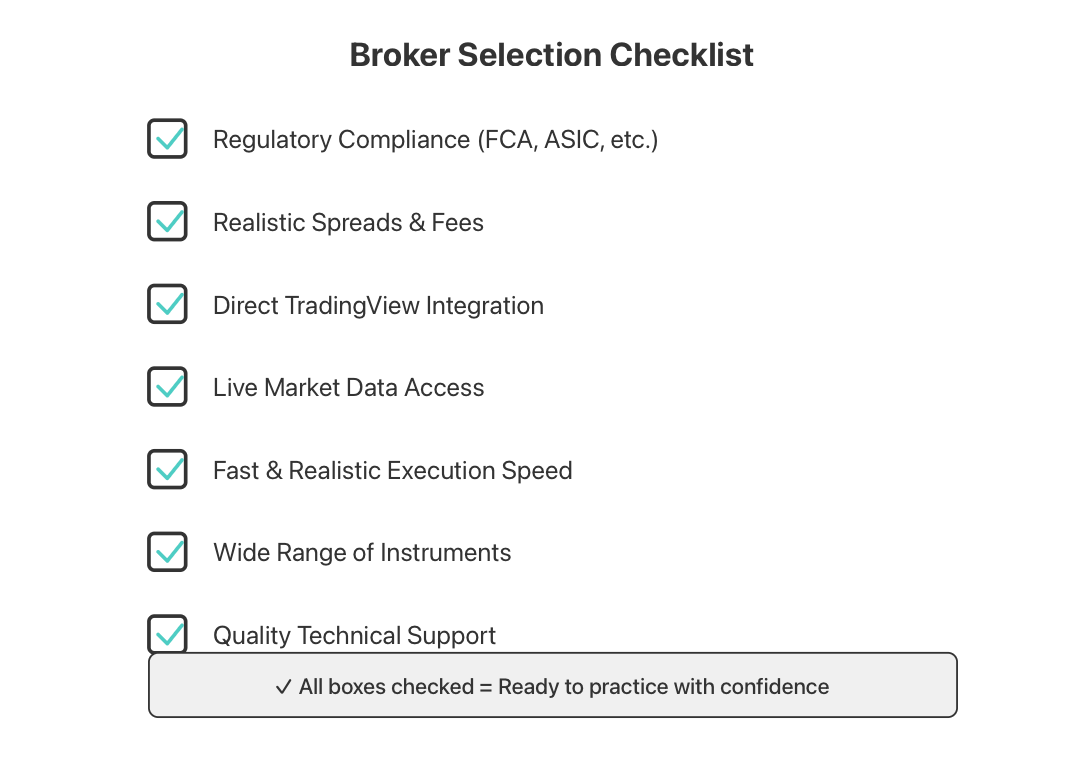
To properly assess a demo brokerage on TradingView, check these items:
1. Regulatory Compliance: Stick to those brokers that are regulated by a respected governmental agency (Such as the FCA in the UK, Australian ASIC, Turkish capital markets authority, or a similar equivalent). This protects you from fraud when you go from demo to live accounts.
2. Pricing and Fees: Only use demo accounts showing realistic, accurate spreads on trades. If a demo shows spreads as low as 0.1 pip and then a live account has spreads as high as 1.5 pips, your verification of any trading strategy is worthless.
3. Technical Support: Can you trade from charts in TradingView? Being able to trade using TradingView allows for quicker and easier execution of trades.
4. Access to Live Data: The best brokers allow access to live market data, allowing you to trade under real trading conditions while practising on a demo account.
If you are starting as a forex trader, one of the best resources available to you will be through the use of a demo account. A demo account allows traders to test out different trading strategies and tools before actually risking real money. A reputable broker, such as OAND,A provides demo accounts through TradingView with the following features:
-
Live market data of real Forex pairs
-
Accurate spreads similar to Live accounts
-
Order execution directly on your TradingView charts
-
Access to over 100 instruments such as Forex, Indexes, and Commodities
The difference between a good and bad demo account is the difference between gaining experience and wasting time. Choose wisely when selecting a Demo Broker!
Build Real Trading Skills with Demo Trading
To prepare adequately to trade with your own capital, it is essential that you learn and master five important demo trading skills or components:
1. Chart Reading - be able to analyse price structure, identify support/resistance levels, and understand candlestick patterns.
2. Indicator/Strategy Validation & Testing - where you will test your systems using both backtesting and live demo trade results.
3. Risk & Position Management - how to protect your money through the use of proper stop loss orders and position sizing techniques.
4. Cross-Referencing Journal & Performance - how to log your trades and analyse your performance so that you can identify trade patterns and remove any trading errors.
5. Transitioning into Live Trading - You should always transition into live trading slowly and with a complete mental awareness of what it takes to be successful at it.
Every professional trader has these skills to rely on, so they are not optional. Additionally, the difference between the beginner trader who has some success and the beginner trader who is unsuccessful is based on how hard they work during their demo phase.
So, develop your demo trading system today! Do not rush, skip any part of it, or view demo trading merely as practice; your demo trading system will be your true laboratory in which to develop profitable results before the market charges actual tuition fees for the opportunity to obtain them.
There is no better way to create an edge in the long-term success of your trading skill development than to choose a broker that offers a demo account on TradingView. TradingView is a platform that provides professional-grade tools while simulating actual trading conditions without risking any capital with the chosen broker.
Stop guessing and start mastering. Visit btcdana.com to discover a risk-free trading lab set up today.