



Imagine stock that was trading at $20 per share now suddenly jumps to $300 per share in a few days. Hedge funds wipe out billions of dollars as retail traders celebrate their big gains. This is not fiction, it’s the phenomenon known as a short squeeze, one of the most spectacular episodes in financial markets.
If you've ever been curious about how these explosive moves happen, or if you want to learn how to identify them before they happen, you're in the right place. We break down everything you need to know about short squeezes from the mechanics behind them, to what to spot when a short squeeze is being set up.
What is a Short Squeeze? The Mechanics of Short Squeezes
A short squeeze occurs when short sellers get stuck in their positions and are forced to buy shares back in a hurry, creating a lot of upward pressure on the stock price. Think about a financial panic but rather than everyone selling, short sellers are trapped and they are scrambling to buy back shares, causing prices to rise higher and higher.
Here's how it works. When you short a stock, you are borrowing shares from your broker, and then you immediately sell them, hoping the stock will decline in price, so you can buy them back cheaper later. You make money from the difference between your sell price and your eventual buy-back price. The catch is you must eventually return the borrowed shares.
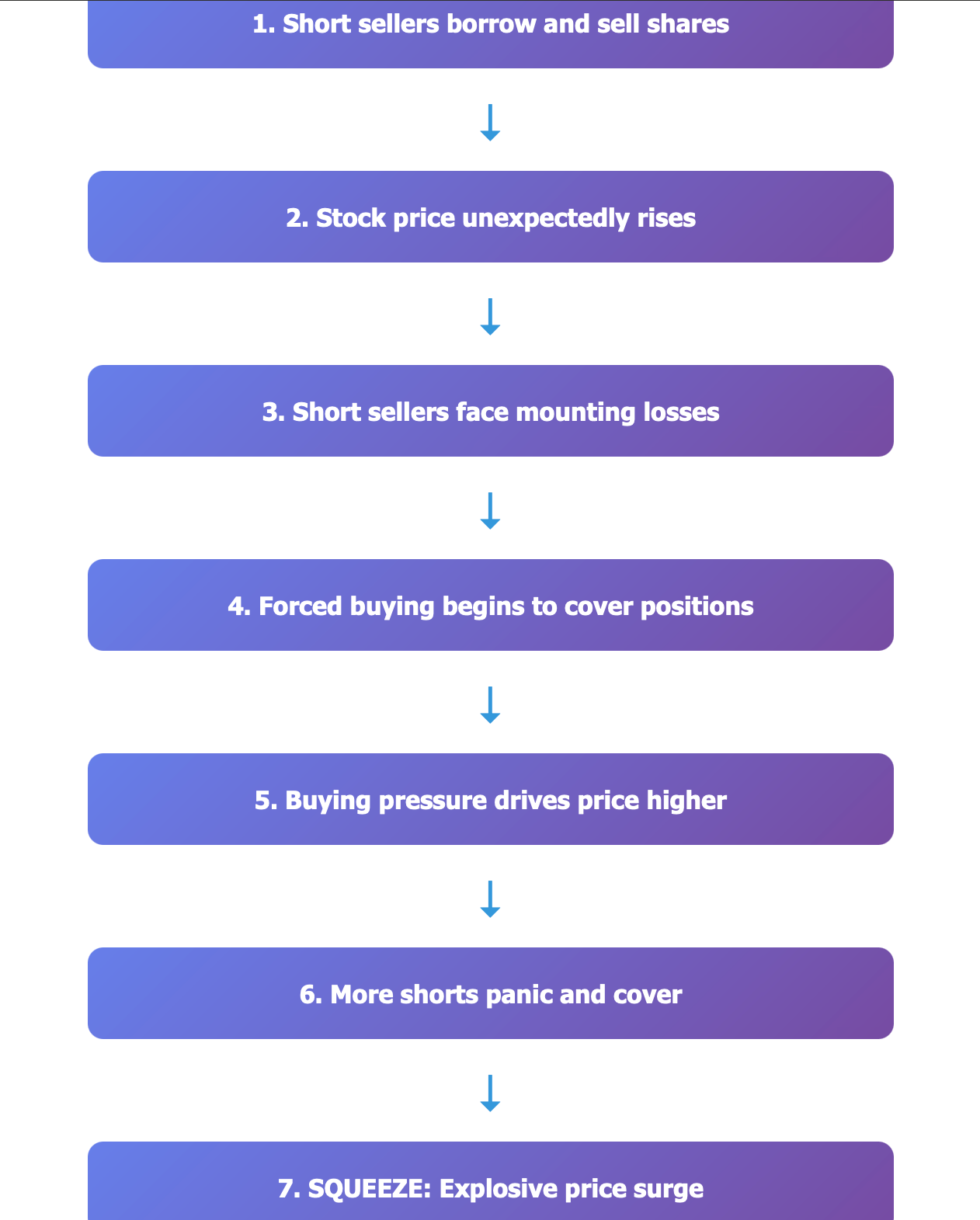
When a heavily shorted stock begins to rise instead of decline, short sellers will be forced into greater, because theoretical risk of a short position is unlimited (a stock can rise indefinitely), many of the shorts reach the threshold of their pain point, and quickly rush into buying the shares, thus pushing the price even higher.
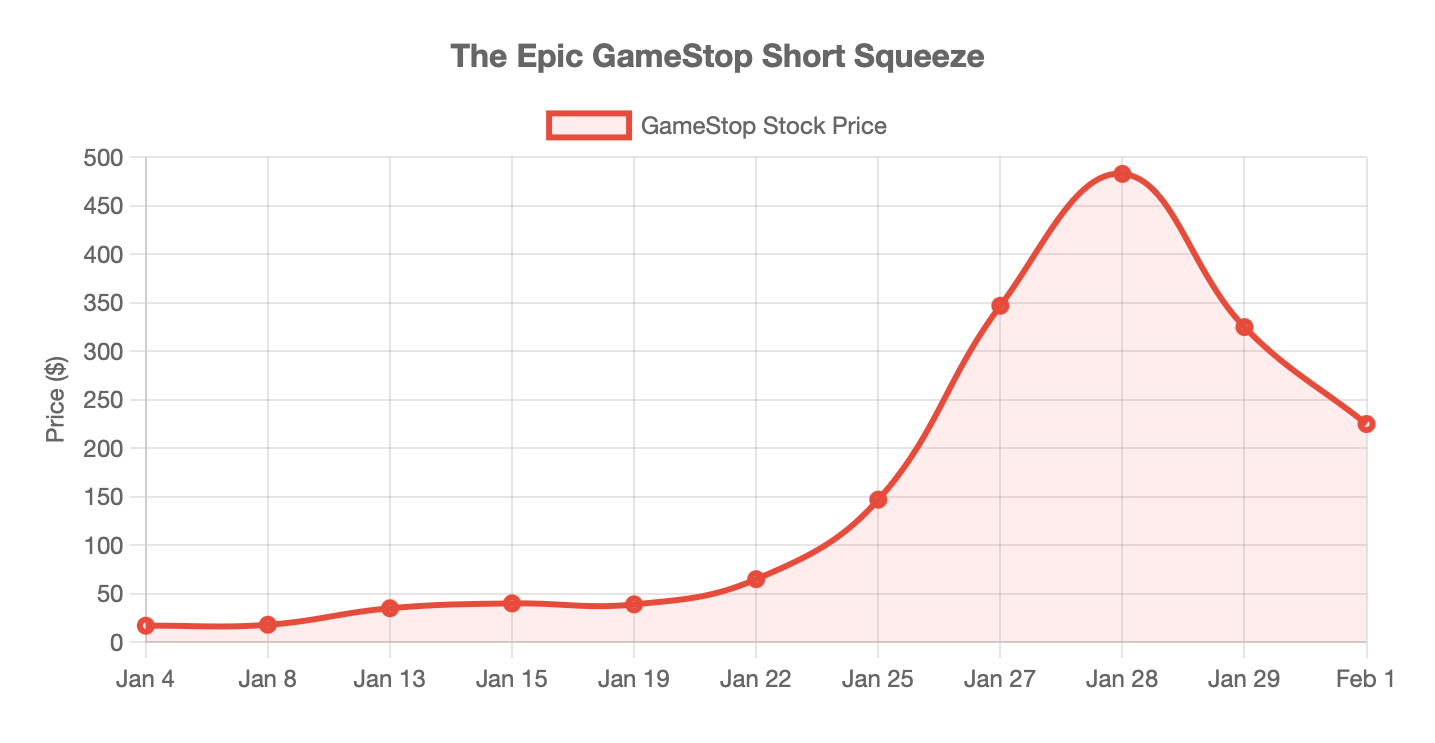
The more that happens, the higher the price goes, and the more panic-buying occurs. GameStop's insatiable rise in January 2021 is a perfect example. The stock had been trading only around $20, until retail traders on Reddit discovered that hedge funds had shorted the stock for more than 100% of available shares. Once a coordinated buying frenzy began, the stock rose to more than $480, resulting in billions of losses to hedge funds as they were forced to cover their shorts at extraordinarily high prices.
To put this into a simplistic situation: imagine you "borrowed" a rare comic book from your friend to sell for $50, thinking that you could buy it back for only $30. Suddenly, there became a desire for that comic book, and the price spiked to $200. You are somewhere in the middle, with a huge decision to make. "Should I cover for $200, and hemorrhage $150 dollars, or stick it out?" If you need to return the comic book to your friend, you have to purchase it back, regardless of price. This is effectively what short sellers experience during a short-squeeze.
The most important thing to understand is that a short-squeeze can create extraordinarily irrational spikes in price based on forced buying, as opposed to value based on fundamental principles. The supply and demand imbalance becomes disproportionate, due to the fact that short sellers have to buy, regardless of price.
Important Conditions to Identify a Short Squeeze
Stocks that are shorted do not always experience a squeeze.For the perfect storm, specific market conditions must align. If you can spot these specific market conditions before the rest of the crowd, it will allow you to identify a potential opportunity.
High Short Interest Ratio
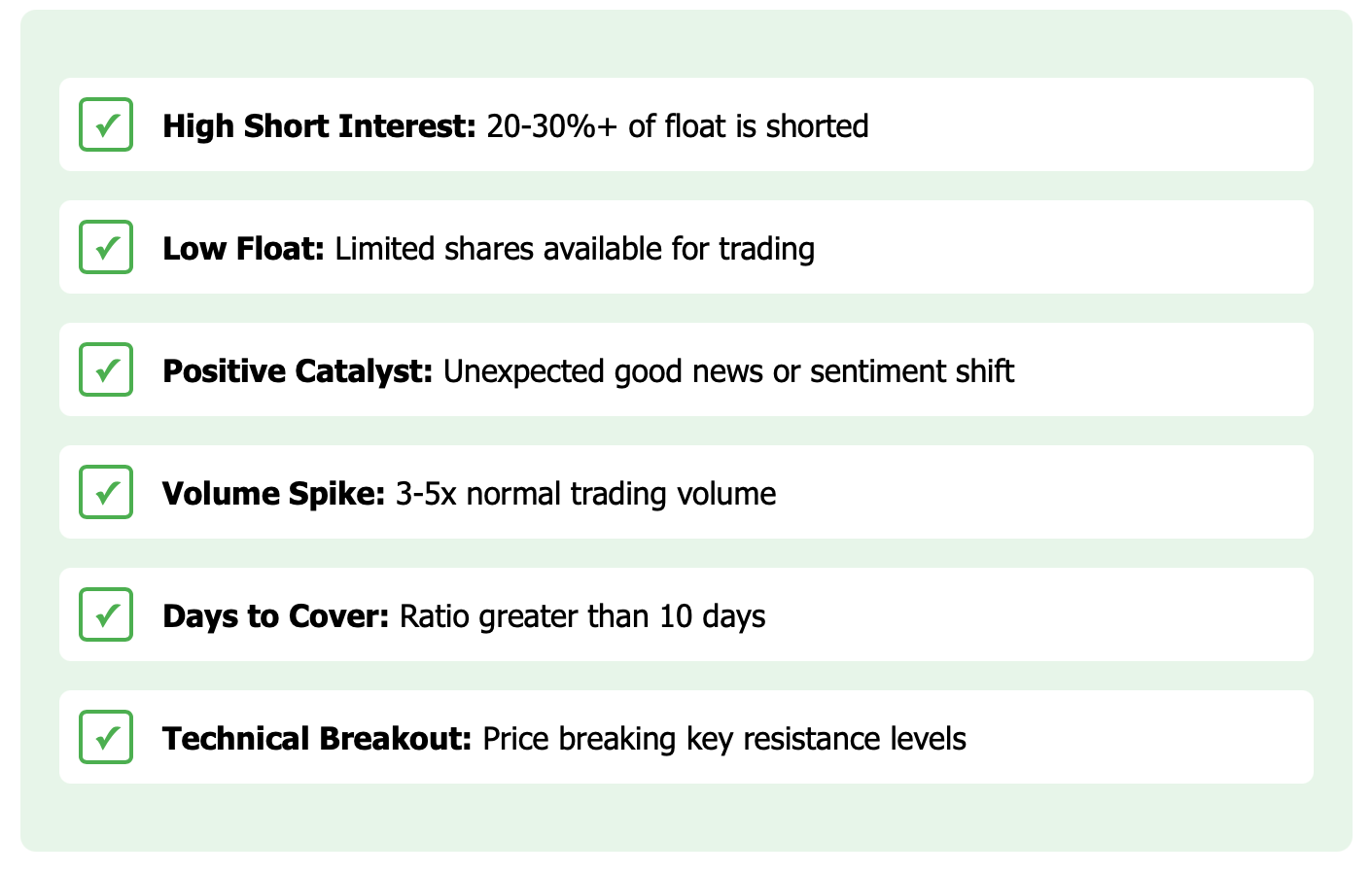
The most important condition is the short interest ratio, which is the percentage of shares available in the company (the float) that have been sold short; specifically, when the short interest is 20-30% or worse, you can squeeze the stock and push it higher. In early 2021, the short interest for an equity called GameStop was an astounding 140% of the float. This means that short sellers had borrowed more shares than the company had float shares in existence, then subsequently sold short.
You can source short interest data from financial websites like FINRA, Yahoo Finance, or your brokerage research. They typically update the short interest data as it is reported every two weeks, so you will want to track it as a change in short interest can serve as an indicator.
Low Float or Limited Liquidity
The smaller the float size the easier it will be to squeeze, as there are less shares available to buy. Once shorts start to cover in a low float stock, they simply cannot find enough shares to buy to cover to ensure they don't drive the price higher. This is like trying to buy tickets to a concert with only 100 out there; the buying pressure will push the price through the roof.
The AMC Entertainment short squeeze in 2021 is a perfect example of this use case. Since the float was so limited in size to begin with and had very massive short interest, the price swung from around two dollars to over seventy dollars squeezing shorts into an illiquid market to cover.
Positive News or Sentiment Change
Short sellers like bad news, and they like bad fundamentals. When some unexpected event occurs such as an unexpected earnings report, new partnership, or regulatory approval this provides the initial ignition of the squeeze. The momentum shift also causes some shorts to act pre-emptively (getting out as fast as they can), then price is carried even higher, which then triggers more shorts to cover.
Tesla has experienced multiple short squeezes throughout the years with news such as better-than-expected delivery numbers or even a massive contract that catches the aggressively pessimistic shorts off guard.
High Leverage on Short Positions
When institutional investors are shorting and then using a margin account, they are even more subject to a squeeze. As the stock starts lifting on the short covering typically their brokers start issuing margin calls on the institutions to either add more capital or close their position. Either way, this multi-pronged forced selling into an already difficult position adds exponential upward pressure to the price.
The combination of these items creates the best platform for a short squeeze. High short interest combined with low liquidity combined with a positive catalyst equals a potential explosive event to the upside. Think of it like kindling that is mixed with oxygen and a source ignition individually, can be managed, but together can blaze into an inferno.
Market Impact of a Short Squeeze: How Stock Prices React
Once a short squeeze event starts, its effects are felt throughout the entire market ecosystem. The price action can become vicious and unpredictable, testing the nerves of even seasoned traders.
Explosive Volatility
During a squeeze, price movement of 50 - 100% on a daily basis is not at all unusual. For example, during its peak squeeze, GameStop stock moved up over 400% in a single week. The type of price movement you'd see in regular markets should not look like this, it is panic-driven dislocation leading to extraordinary volatility. You will see candlestick charts from this time showing massive wicks and gaps because of the price whipping back and forth between extremes.
The volatility is not just restricted to price either. Options prices can gain tremendous premiums as the implied volatility (IV) can increase exponentially. The trading can get so wild that sometimes exchanges will halt the stock multiple times in a day to let the market cool off.
Psychological Warfare
Short squeezes are as much a psychological event as they are a financial one. Institutional shorts that have held what they believed to be a position of confidence can find themselves faced with catastrophic losses on Thursday to be wiped out by Sunday. For some, this means doubling down the handle of their short, and betting the upward price action collapses. For others, it results with a panicked cover back to the first shorts tactic.
Of course, retail buyers balancing timelines experience their emotional rollercoaster. Those who bought in early are feeling vindicated while having an emotional surge. Those retail buy in late resorts to buying when things could be very close to the top after having a severe case of FOMO (fear of missing out). When the squeeze collapses, it takes them, and usually, they exit with losses when the stock price drops.
The Chain Reaction Effect
As one short seller is forced to cover sells, they force another one to cover their position. Increasing the squeeze. Once momentum comprises it only takes (let's say) 2 more for the lesson to start on margin.Each fresh wave of covering causes prices to rise even more, creating the next wave of covering. It's a reflexive domino effect, feeding on itself until the shorts are done covering, or someone else steps in to short it in that elevated price range.
During the AMC squeeze, institutional ownership statistics showed that multiple hedge funds closed short positions within days of one another. Each time one fund exited it drove the price up, and it caused a sense of urgency for the remaining shorts to exit before getting deep in the red.
The market effect goes beyond just the stock being squeezed. Funds forced to exit shorts may liquidate all sorts of positions in order to raise cash to cover the short position, creating a selling pressure across their entire portfolio. Even stocks that have little business tying them to the stock being squeezed can fall victim to the contagion.
The Indicators to Look for to Find a Potential Squeeze
Finding candidates for a squeeze before they go off is the process of combining indicators and data. There is no strong evidence that one indicator will result in a squeeze, but putting indicators together will create an easy way to see the potential vulnerability of trading on the short side.
Track Short Interest Data
Starting with the basics, the first indicator to watch is short interest as a percentage of float. A stock trading above 30% short interest is worthy of concern, but don't just look at the number and rely on it; look at trends as well. Is short interest increasing with the stock remaining flat or going up in price? That's a significant amount of shorts really digging in and committing to their short position, which can result in a trap.
Review days-to-cover ratio. This shows the amount of days measured in the average trading volume a fund would need to cover its short positions. A ratio greater than ten days indicates it would not be easy for a fund to exit a short position quickly, which increases the possibility of a squeeze.
Volume Patterns
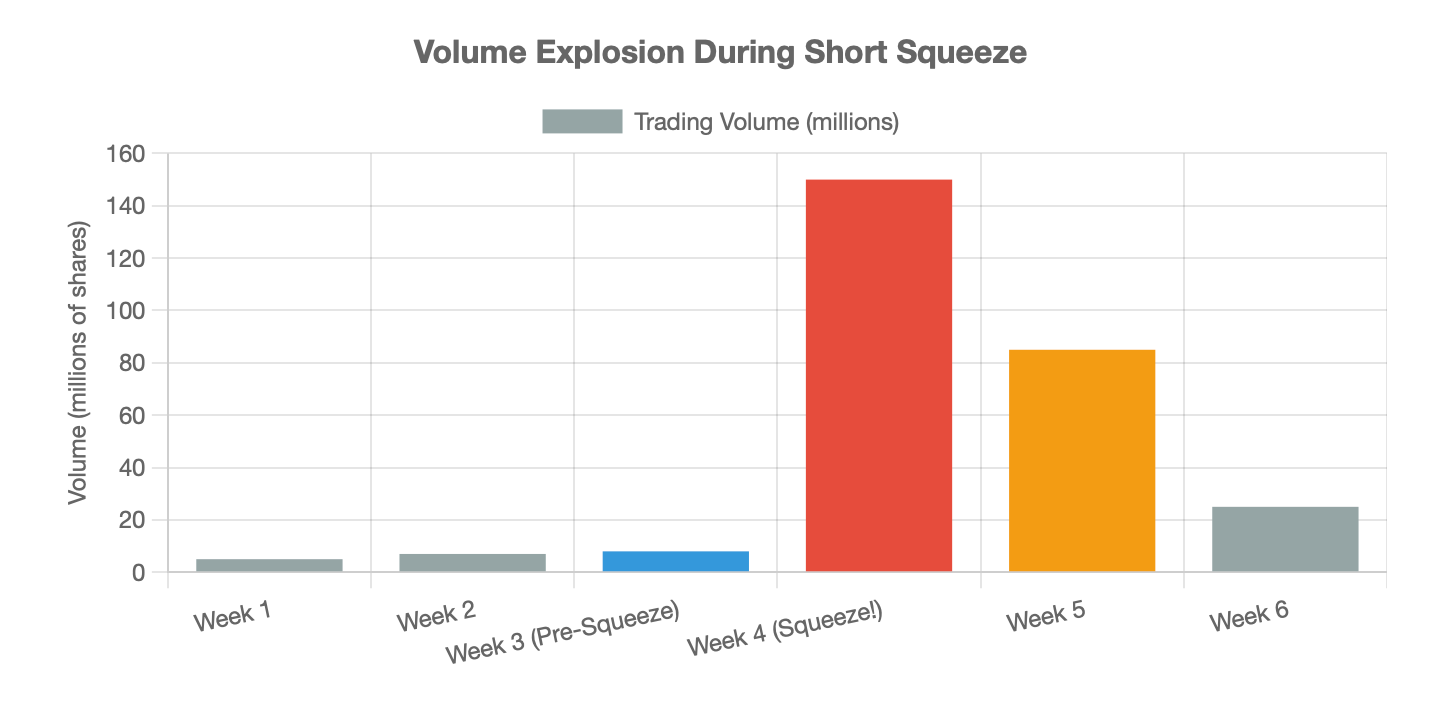
Volume patterns are often a leading indicator before a squeeze occurs. When volume has increased by more than 3-5x normal volume, even more so on days when the stock is green, it signals the initial spark of cover. Look for major spikes in volume on green candles while the stock rests up against resistance lines.
When reviewing volume, consider float size. When the total volume traded equals daily volume greater than or equal to float number, you've had intense trading activity which could translate to a coverage forced squeeze.
Catalysts and Sentiment
Set news alerts for heavily shorted stocks. Once the positive announcement happens, it'll trigger the spark. Social media sentiment is also worth monitoring, as retail coordination on Reddit, Twitter, Instagram, TikTok, and other forums have become relevant forces in modern-day short squeezes.
Make sure to look for upgrades, short shorts, or analyst upgrades in shorted names that create poor sentiment before the spark of activity. Look for other positive announcements. These events can flip the sentiment of the stock which can result in a major move.
Technical Indicators
Look for indicators such as the Relative Strength Index(RSI) as a broad measure of when a short's position is finally exhausted, and momentum can change across the chart as a result of the shorts closing too heavily for too long. RSI alone on a heavily shorted stock when it is above the 30 line when excess short covering pushes the price action back in the favour of the long position.
A moving average is another strong indicator to use. Often a heavily shorted stock will break above a typical 50- and/or 200-day moving average with strong volume that will signal the momentum will change further up price levels.
Watch for breakout patterns where one stock might be consolidating near resistance with heavy short interest. This stock becomes a coiled spring waiting to topple over the initial resistance levels. When the stock breaks through resistance levels with volume, it is often the start of a squeeze.
Combine multiple indicators into a filter. Scan institutions for stocks that are above a 30% short interest, volume increases, news institutions showing positive movement, stocks breaking above a moving average, or irrefutable breakout patterns. The combination of these indicators gives the strongest chances for finding a squeeze candidate..
Real-World Short Squeeze Examples: Case Studies of Price Surges
Real-life examples are the best teachers. Let's take a look at some of the most notorious short squeezes that occurred within the last few years, and observe some of these concepts in action.
GameStop (GME) – January 2021
The granddaddy of modern short squeezes. GameStop, a brick-and-mortar video game retailer, had been severely shorted by the largest hedge funds on Wall Street, who believed the company was fundamentally dying. Short interest exceeded 140% of the float, which is impossible mathematically without naked short selling. Retail traders on the Reddit platform, WallStreetBets, began to recognize the weakness of this company in late 2020. GameStop was trading around $17-20, early January in 2021 when coordinated buying started to escalate the short squeeze.
Key dates and prices:
-
January 13: $35 (initial breakout)
-
January 22: $65 (momentum builds)
-
January 27: $347 (peak intraday)
-
January 28: $483 (absolute high)
Within a few weeks the stock eventually collapsed back under $50 as the short squeeze ended. Short sellers were reported to have sustained losses upwards of $20 billion, while those early retail buyers made a fortune. Individuals who bought into the stock after it surpassed $300 ultimately sustained heavy losses.
The technical setup was a textbook case: extreme short interest, a float size small enough relative to the size of the short position, a clear catalyst (retail coordination), and volume exploded from 7 million shares a day to over 197 million shares on peak trading days.
AMC Entertainment (AMC) – May-June 2021
In the aftermath of the GameStop short squeeze, retail traders went on to target heavily shorted names. AMC was severely treated amid the pandemic and lost all of its business with theaters closed. AMC had short interest of approximately 20% of the float at the time. For the majority of early 2021 the stock drifted around $2-10.At the end of May, the squeeze ramped up:
The following illustrates the price movement:
$12 on May 24; $26 on May 27; and $72 on June 2 (the peak).
The squeeze for AMC was a result of improving pandemic conditions (which led to a positive catalyst), sustained retail buying pressure and (and), shorts being trapped. A mix of the news and the technicals made this a perfect squeeze.
Proper entry points could be around the $10-12 range when the stock broke through resistance with strong volume. Conservative traders would have exited once the stock fell to the $8 area
If they were to take profits around the $40-50 range, they would have captured most of the price movement, while also exiting before the fall back to the $30 area.
Tesla (TSLA)- 2020
For years, Tesla has continued to be one of the most contested stocks among bulls and bears. Throughout 2019, short-selling investors placed a bet against the company's ability to achieve profitability and scale production. The panic short-s sellers were witnessed at the beginning of 2020 when Tesla stock was around $100 (adjusted for the split).
Once the company successfully reported its own quarterly profitability and with production ramping above some of the quarterly numbers provided to investors, the shorts were caught wrong-footed. Squeeze upon aggressive short selling continued for months until institutional shorts finally capitulated.
Key hallmarks of the stock at the time:
-
January 2020 - $140;
-
February 2020 - $190 (pre-split);
-
August 2020 - $450 (pre-split).
This example did not experience a violent squeezing that last a few days, but rather a slow grinding and continuously short covering rally that last a few months. Each positive news story related to the company (delivery numbers, battery technology improvements and S&P 500 inclusion) forced another wave of shorts to cover their contracts.
Lesson: just because a stock is in a squeeze does not mean it will take place overnight or sometimes even in a few weeks. A squeeze slow burn where shorts give-up over weeks or months while they realize they were incorrect and the fundamentals are progressively improving.
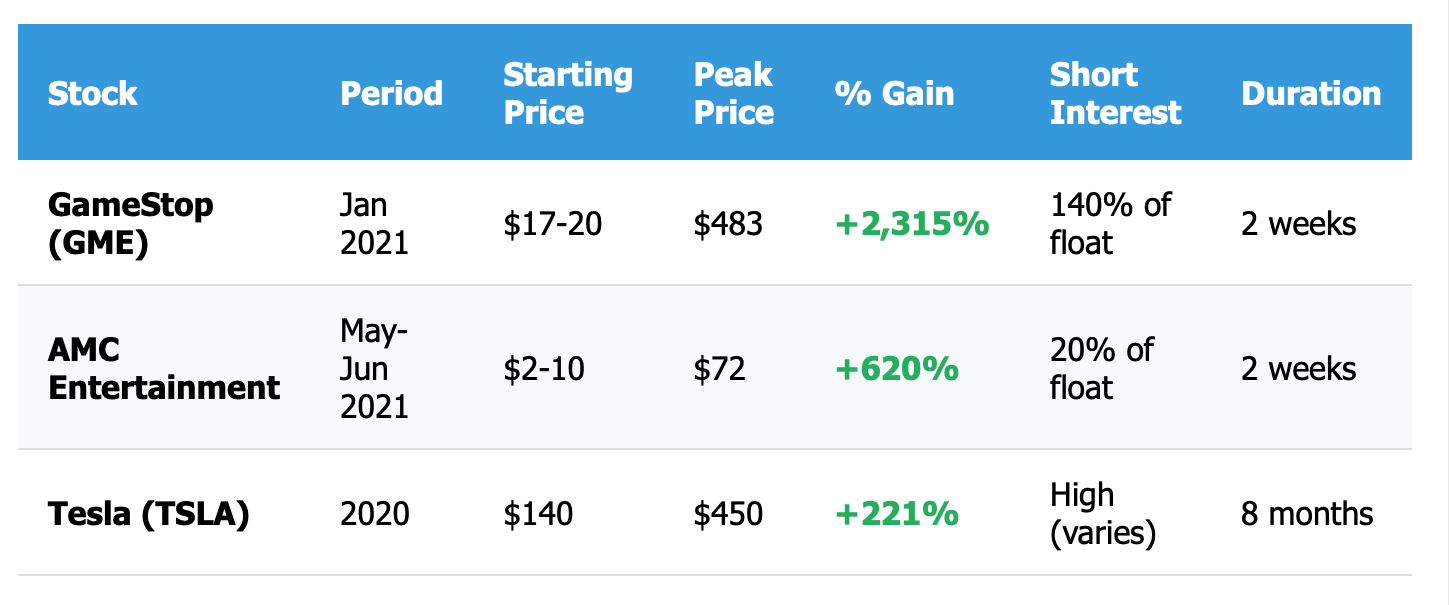
These presents are illustrations of the same general theme contributing to a price movement due to short-covering trickled through daily increments. High-short interest and positive catalysts lead to forced buying (which often overwhelms selling pressure). By being familiar with these patterns, you'll notice the same developments of set-ups developing in the moment.
Risks and How to Approach a Short Squeeze: Risk Management Tips
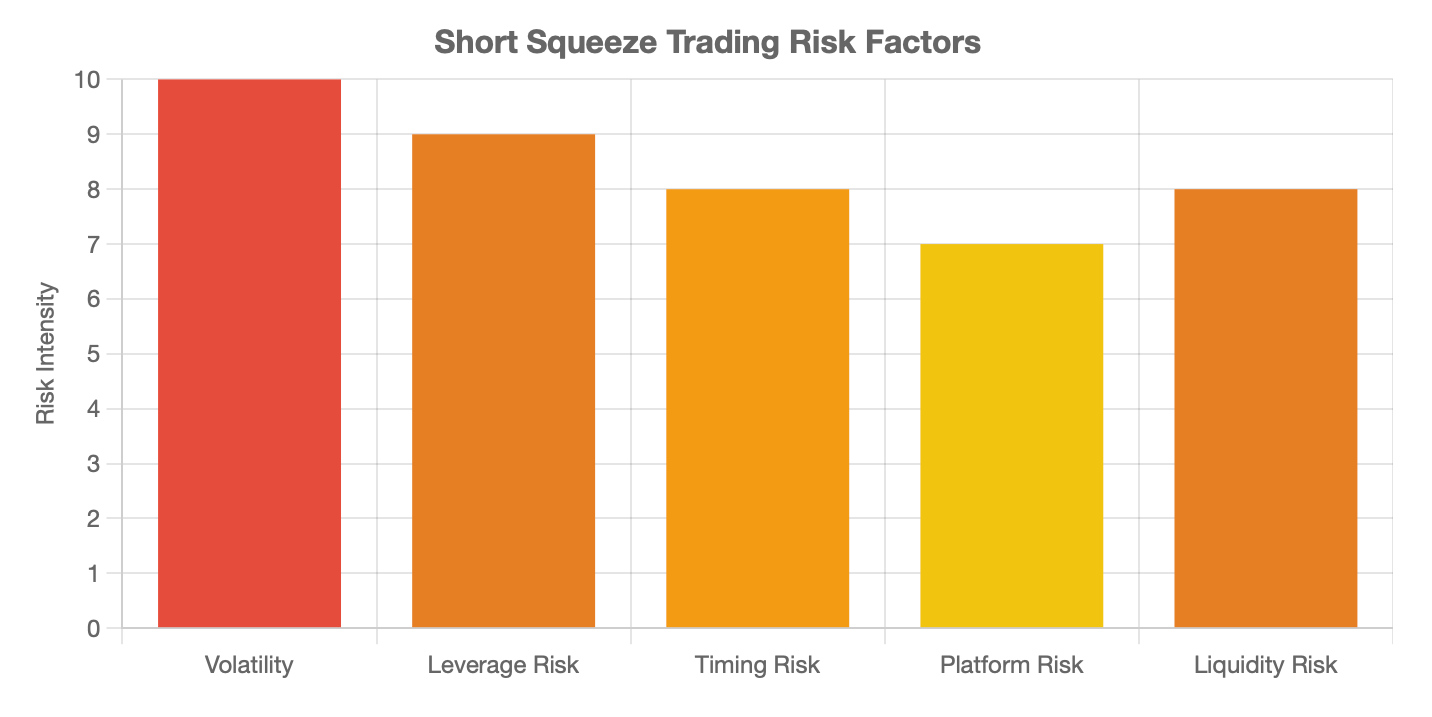
Short squeezes present an opportunity for valuable profit, but they are also incredibly dangerous. The volatility that can create such incredible profits can also wipe out an account at the same speed. It is the way one handles risk management that separates the successful traders from the cautionary study.
Extreme Volatility Equals Extreme Risk
When a stock is capable of gaining or losing 50% in a single hour, normal position sizing guidelines do not apply. What was once a winner on trade at 2:00 PM can be entirely underwater by 3:00 PM. The GameStop squeeze history has thousands of intraday swings of +$150 at a time. Traders who took overnight positions were susceptible to gap moves that incurred gargantuan losses.
You should never risk more than 1% to 2% of your account on any one singular squeeze trade. The temptation of aggressive sizing due to the substantial profit potential is TOUGH! One wrong move can end badly and quickly! The key is to use very small position sizes that allow for survival of mistakes.
Leverage Magnifies Disaster
Trading squeezes on margin or any form of options leverage, is playing with fire. When the price can move 30% against you in minutes, you do not want to receive a margin call, desperately flatting out at the worst possible price imaginable. Many traders throughout the GME trading period were liquidated at a loss because they simply could not raise enough capital fast enough to hold their positions and meet their margin requirements as prices went limit down.
If you are going to attempt to trade squeezes, cash positions or very conservative margin levels is the best way to operate. If you feel inclined to take on options in squeeze trading, options can be great for defined-risk plays. (ex. Buying call options - little downside risk to only the premium) I would however, strongly recommend against selling naked options or fleshing-out complicated spreads that you do not fully understand.
Stop-Losses are Important But Complicated
Volatility creates difficulty in setting stop-loss levels. If you set your stops too tight, normal volatility is likely to stop you out. If you set them too wide, you may lose more than you like before the stop is executed. During squeezes, stocks may cut through stop levels entirely, creating larger gaps that essentially execute the order before you intended to be out of trade.
Whenever possible, use mental stops or alerts rather than hard stop orders. This provides you the opportunity to gauge whether a movement downward is just a retracement due to volatility or if the squeeze is coming to an end. If you have to use hard stops, position your stops according to price structure (below prior support) rather than arbitrary stop loss percentages.
Learn When to Exit
The most challenging aspect, and crucially important, of trading squeezes is knowing when to exit the trade for profit. Often greed encourages traders to remain in a trade looking for more, ultimately leading into a sudden ending of the squeeze and evaporating profits. An example of this is GameStop where it dropped from $483 down to $112 in just two days.
In addition, the same rules should apply to setting exit profit targets as with stop losses, based on technical levels in the stock or a risk-reward ratio that provides for some upside.
Plus, if the stock is still within your risk-reward ration and you have made some money while the stock increases upward, you can take some partial profits as the stock moves up and continues to hold an upside position.
The key is to never let a winning position become a loser right down to greed.
Retail Traders Are Subject to Unique and Very Real Risks
During the height of the squeezes with GameStop and AMC, when brokers told traders to stop buying, traders became stuck in a position and had no way to exit or escalate their positions. It is important to know that platform risk exists, brokers can change the rules of the game at any time.If you are someone who actively trades volatile situations, you will want to diversify among multiple execution brokers. This also sets up a backstop if your preferred platform blocks you like what occurred this past year.
The 2021 squeezes showed us that retail traders are typically the last to know when institutional shorts are covered. When the hype is at a peak from social media proof, guess what? The smart money is already out and retail is now just holding the bag at inflated prices.
Risk management is not glamorous, but it is what keeps you in the game long enough to act when you see an opportunity. Understanding that squeeze trading is actually still speculation and not investing is key to not placing risk on money that you cannot lose.

Conclusion: Take Action When You Can
Short squeezes create the largest and fastest price movements in the financial markets. Not only is it important to understand how they work: What is happening and when can they happen? We hope you have confidence to be able to spot squeezes in the future based on several criteria.
We covered most of the relevant points: high short interest with low float, a catalyst that will cause an initial covering, volume and technical indicators to confirm a squeeze and recognize and learn from the squeezes of GameStop, AMC, and Tesla, all of which are patterns we have seen over the history of the market.
But it is all a moot point if there is no risk and position management. The same forces that create incredible gains will create horrible losses. Position management protects you from the worst case while making sure you don't close yourselves out of peak opportunity. Small positions while placing stop losses and default overall exits will never close a position too soon.
Above all, just remember that a short squeeze is a temporary discrepancy in price and not a true change of value; once a shake plays out, it will return back to earth.
Trading wisely requires timing, discipline, and self-control to grab profits when others are still euphoric.
Would you like to put this knowledge into practice? You can sign on to a demo account at btcdana.com and check where the actual short interest data and start working through spotting squeezes and designing your methods without investment. You will learn to spot the squeeze before it happens.