




. Introduction to Proof of Stake (PoS) – Understanding the Basics.
If you have been keeping up with cryptocurrency developments, you have likely heard of Proof of Stake. It is not simply a case of jargon. Instead, PoS reflects a significant change in the way blockchains operate and how you will be able to earn passive income from your cryptocurrency.
Proof of Stake can be viewed as an evolution of the older mining model. Instead of the use of some super-computing machine racing to solve complex math puzzles (this would be called Proof of Work, or PoW), PoS blockchains select validators based on how many coins they are willing to "stake" or put up as collateral. You are staking tokens to essentially vote on if a block can be validated; you would then get a reward for doing so.
There is a big difference. The PoW network of Bitcoin uses more electricity than entire countries. When Ethereum switched over to PoS, its energy consumption decreased by 99.95%. I am serious. Aside from all the positive environmental impacts, PoS allows regular investors to take part in securing the network without needing to have a huge room full of mining rigs.
Ethereum proved when its successful merge to PoS was completed in September 2022, that large networks can convert. As of now, you can stake your ETH and receive 3-5% annually, just to facilitate the security of the network. No expensive hardware, no large electric bill. Just your tokens working for you.
How PoS Works – Step-by-Step Mechanism Explained.
The mechanics of PoS (Proof of Stake) are easier than you might think. Below is a description of the process that actually happens when you stake your coin.
To begin with, validators are chosen to create new blocks based on a few variables. The size of your stake is the most important, but the networks take into account how long you have been staking, and they randomise some of their selection process, thereby providing more fairness. Think of it like a lottery, the more tickets you buy, the better your chances - but EVERYONE has an opportunity to win nonetheless.
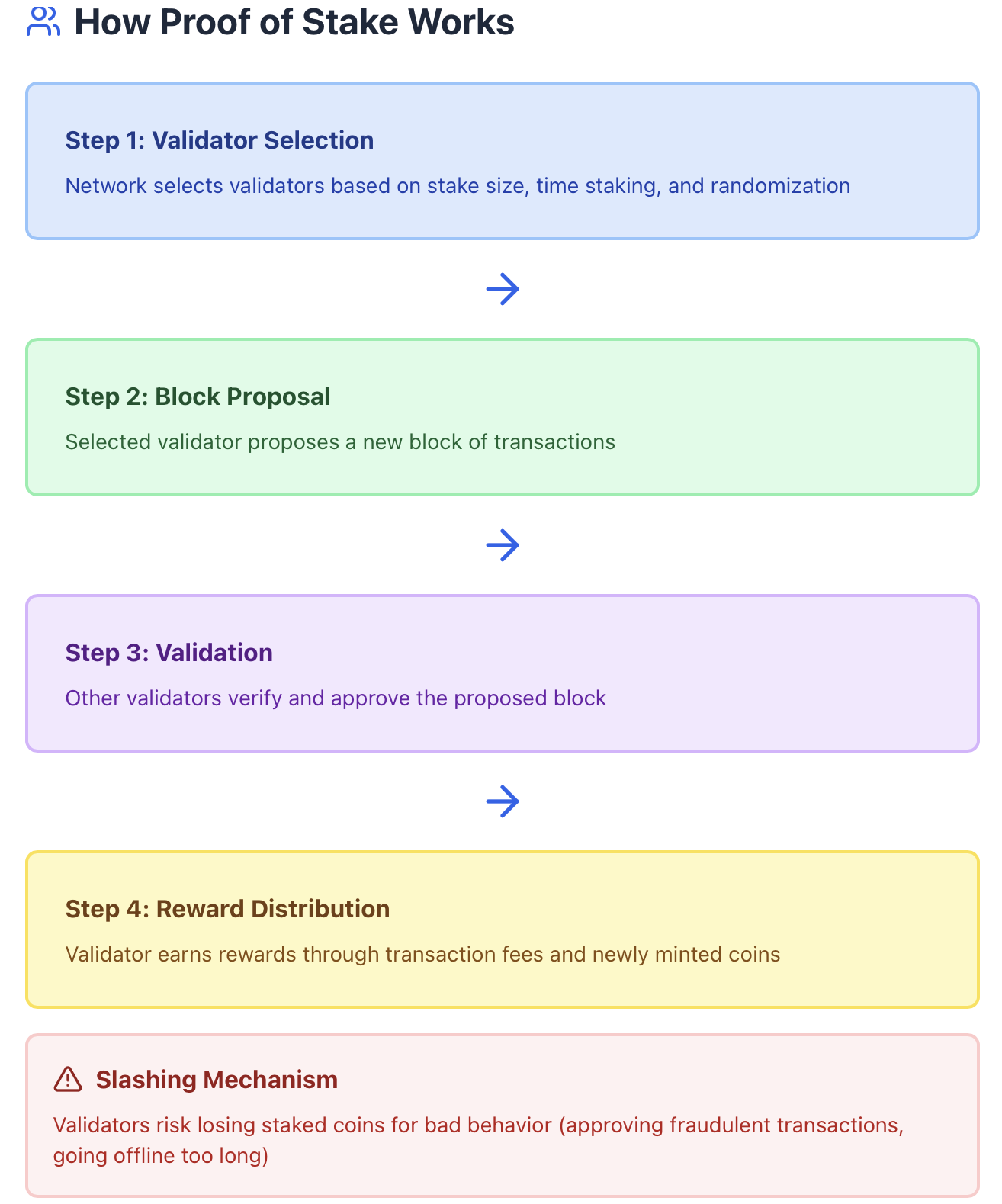
After a validator is chosen, they proposes a block of new transactions. Other validators have to validate the proposed block. If the validators agree, the block is placed on the blockchain. The validator that proposed the block earns rewards through transaction fees and potential new coins *(minted from the network, not other stakeholders).
Cardano has a particularly elegant system; it splits time into epochs (which are roughly five days long), and validators are selected for each epoch based on their stake. Everything is decided for the user automatically, so no active watching is required- your staked ADA is doing the work while you sleep.
However, there is a safeguard to ensure that validators act honourably. Slashing is the risk of losing a portion of staked coins if the validator attempts to approve bad transactions or goes offline too frequently. You can think of slashing as a security deposit you forfeit if you violate the rules. The slashing mechanism is what allows PoS networks to provide security at lower operating costs, without requiring huge amounts of computing power.
The actual yield will change depending on the network. Ethereum yields between 3-5% annually, Cardano yields between 4-6%, and smaller networks can yield 10-15%. Generally speaking, the higher yield comes with higher risk. New networks need to incentivise a high enough yield to attract a validator community.
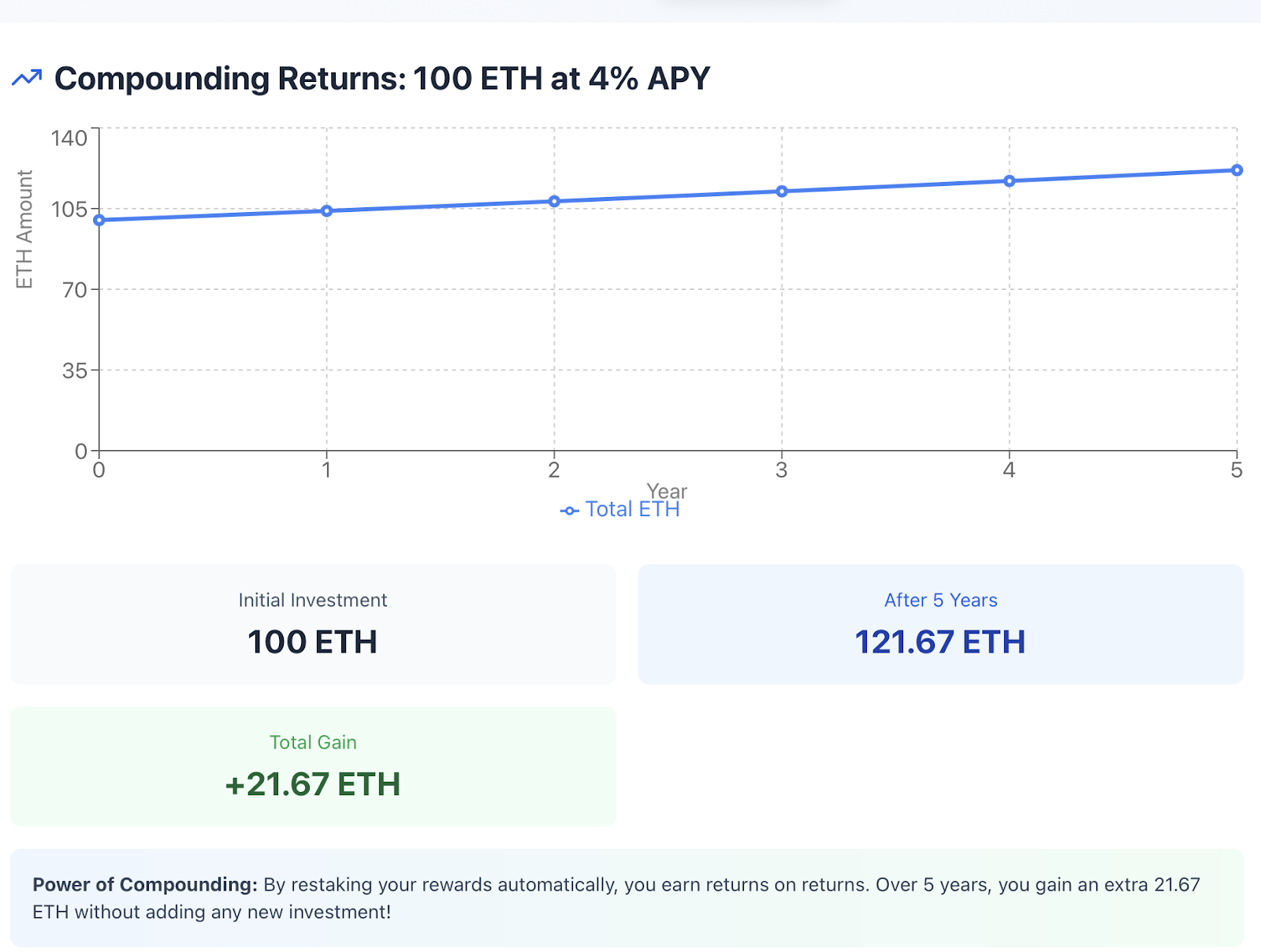
The other benefit of PoS networks is compounding. As a validator, your rewards can be automatically restaked, and you will earn returns on returns. Over time, the compounding process can lead to meaningful growth for passive investors.
PoS vs PoW – Key Differences and Advantages
The discussion about PoS and PoW goes beyond theory. This has implications for your return on investment, the planet, and the future of the entire ecosystem.
In a PoW network like Bitcoin, miners must invest in specialised hardware and pay for electricity. The Bitcoin network's total operating costs are over $10 billion every year, just to cover energy. Only miners with cheap access to electricity and capital can be competitive. PoS inverts this model entirely by allowing anyone with the minimum stake to participate and secure the network.
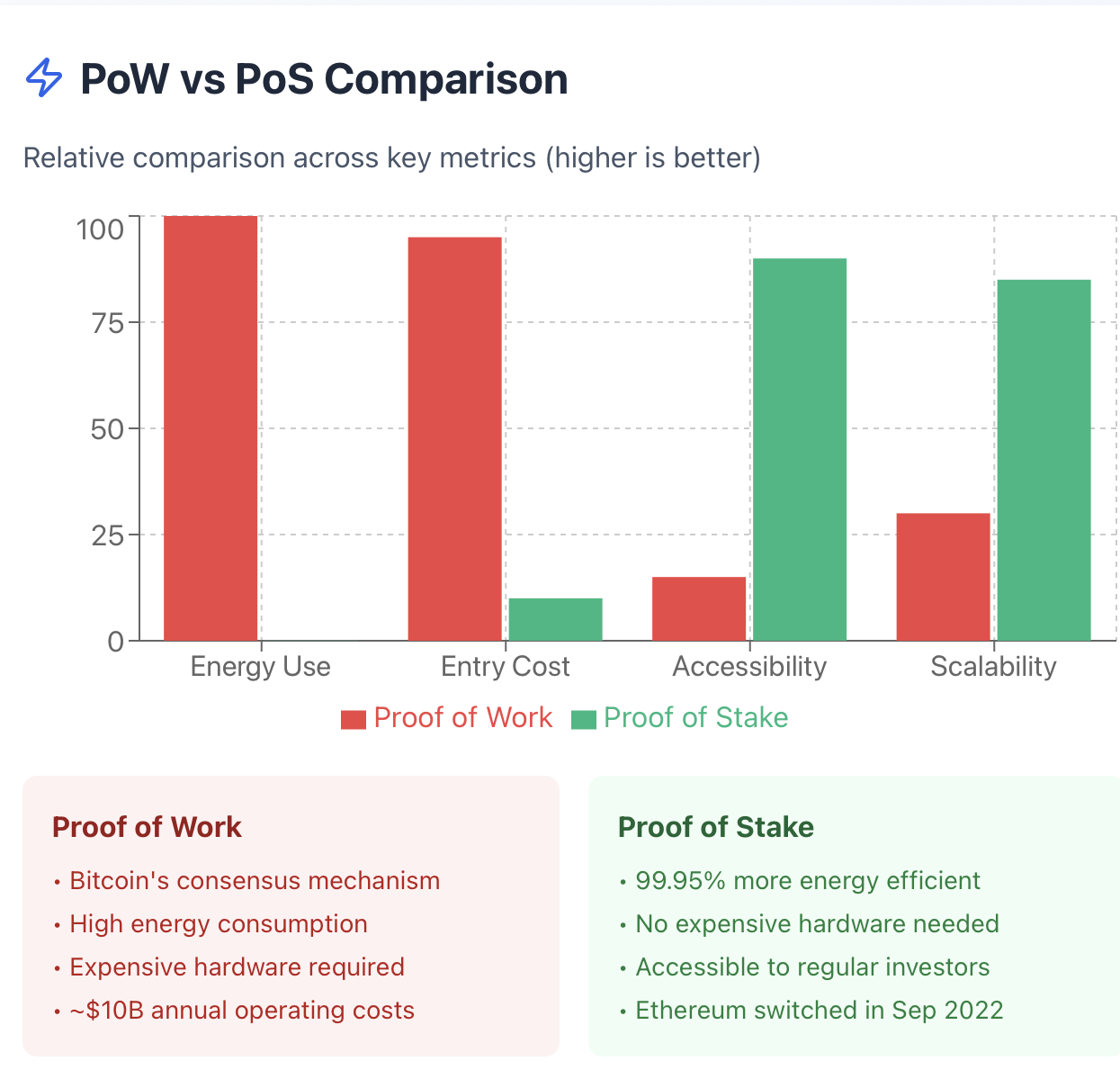
The security model is fundamentally different. PoW relies on attacks being prohibitively expensive from a hardware and energy perspective. In order to attack Bitcoin, an individual would need to own 51% of the computing power to do so. An attack on the Bitcoin network would cost billions. PoS models achieve the same level of security by requiring an individual to also own 51% of the staked coins. Attacking the network means devaluing their own assets through the slashing mechanism.
Scalability is another interesting distinction. PoW networks have slower transaction throughput because mining blocks takes time and energy. For instance, Bitcoin can theoretically process around 7 transactions per second. In contrast, Ethereum's PoS upgrade helped pave the way for future scalable solutions for Ethereum to process thousands of transactions per second.
The move from PoW to PoS on Ethereum is probably the best case for study. Before the merge, miners made a profit mining Ethereum, but at great cost to the environment. After the merge, the network became 99.95% more energy efficient while maintaining security. Validators now earn similar or better staking rewards than the risk of mining costs.
Traders and investors should keep in mind that PoS networks provide participation opportunities that PoW cannot. There is no need for technical expertise or upfront capital to purchase mining rigs. Buy the coins, stake them and earn.
Staking in PoS – Earning Rewards from Your Tokens
Staking is the point at which theory and practice collide; this is how you can actually make money from PoS Networks! The mechanics are simple. You lock up your tokens for a certain time, the network utilises your stake to help secure itself, and you earn rewards based on the size of your stake. Some liken it to a savings account, but I think that is selling it short. Bank savings accounts (the norm) pay on average 0.5-2% (in most countries). High-quality PoS networks pay a minimum of 4-10% or more.
The lock-up period differs widely. Ethereum now has no minimum lock-up period and allows unstaking after a few days’ wait. Polkadot may require 28 days. Some networks will lock your coins for months. This illiquidity is the trade-off for staking rewards.
Your returns compound beautifully over time. Let’s say you stake 100 ETH at 4% annual yield. After year one, you would have 104 ETH. If you stake that reward, after year two, you would have 108.16 ETH. After year five, with compounding, you would have 121.67 ETH – without adding a single new coin.
There are two primary ways to stake crypto. If you run your own validator node, you can earn maximum rewards, but you must meet minimum stakes and have some technical knowledge to be a validator for the staking mechanism. For example, Ethereum requires a minimum of 32 ETH, which is equal to about $60,000 based on current prices. The second way to stake is delegated staking, wherein you can participate with any amount through exchange platforms or staking pools. All staking platforms, such as Coinbase, Kraken, and Binance, offer their users staking services. In this case, the user will earn slightly less than solo validators, but only because the platform will take a small cut, while also providing a layer of simplicity and liquidity during staking.
Cardano's ecosystem is an example of accessible staking. Users are allowed to stake any amount of ADA. There is no lock-up period, and you hold custodial ownership of your coins, so they never leave a user's wallet. The user delegates to a stake pool operator, who does all the technical work, and the user just waits and earns rewards every five days.
Polkadot features nominator staking, which entails staking your DOT tokens by selecting other validators to back. The current yield on the Polkadot network is approximately a 14% yield, albeit it is not fixed due to network participation. You will need about 250 DOT to stake, which is reasonable but not as easy as Cardano.
There are risks that we will discuss later, but it is clear what the value proposition is. You can either let your coins sit and do nothing in the wallet or have them work for you through staking. If you are a long-term holder, staking is almost always the better strategy.
Popular PoS Cryptocurrencies – Top Tokens to Stake
Different PoS networks have different levels of quality and expense. Let's discuss what some of the better offerings are and their benefits to stakers.
Ethereum (ETH) tops the list after its merge in 2022. As the second-largest cryptocurrency by market cap, it has provided a level of network stability that smaller coins do not possess. Additionally, staking yields hover around 3-5% annually. For solo staking, the minimum work is 32 ETH, BUT several major exchanges allow you to stake any amount you would like. The liquidity advantage is the most compelling, including network effect considerations, but the staking yield returns are lower than many other newer offerings out there.
Cardano (ADA) built the entire architecture around PoS from day one. This makes the staking denomination truly user-friendly, since there is no minimum, no lock-up periods and staking rewards are distributed every 5 days rather than 30 days. Yields have typically seen 4-6% annual staking reward returns. Cardano's academic and research-driven development process attracts believers in the long-term fundamentals of the network. You can stake ADA from any wallet like Daedalus or Yoroi, and you will maintain complete control and ownership of your own ADA.
Solana (SOL) provides higher risk and reward with offers of staking yields around the 6-8% range. However, this network suffered multiple outages, therefore questioning the reliability of the PoS network. Like Cardano, the effective minimum to stake is low, but Solana is most attractive to the DeFi user, with transaction times and low transaction fees. Solana is most definitely a bet on next-generation blockchain scaling.
Polkadot (DOT) stands out for its relay chain and parachain model. It's an attractive option, particularly with staking yields of around 14%, but the minimum of about 250 DOT ($1500-$2000) may deter some investors. However, if Polkadot's vision for interoperable blockchains comes to fruition with a multi-chain future, it could greatly benefit investing in DOT.
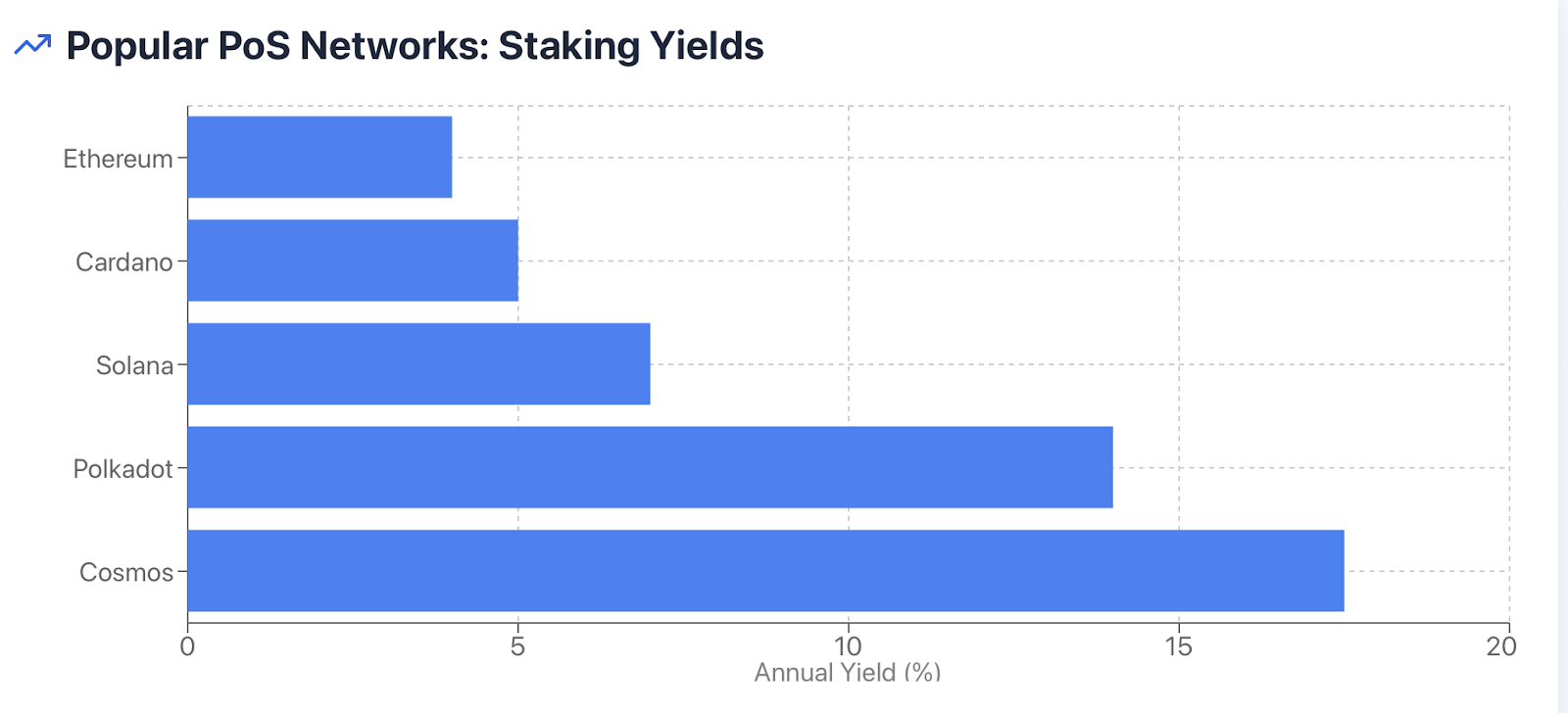
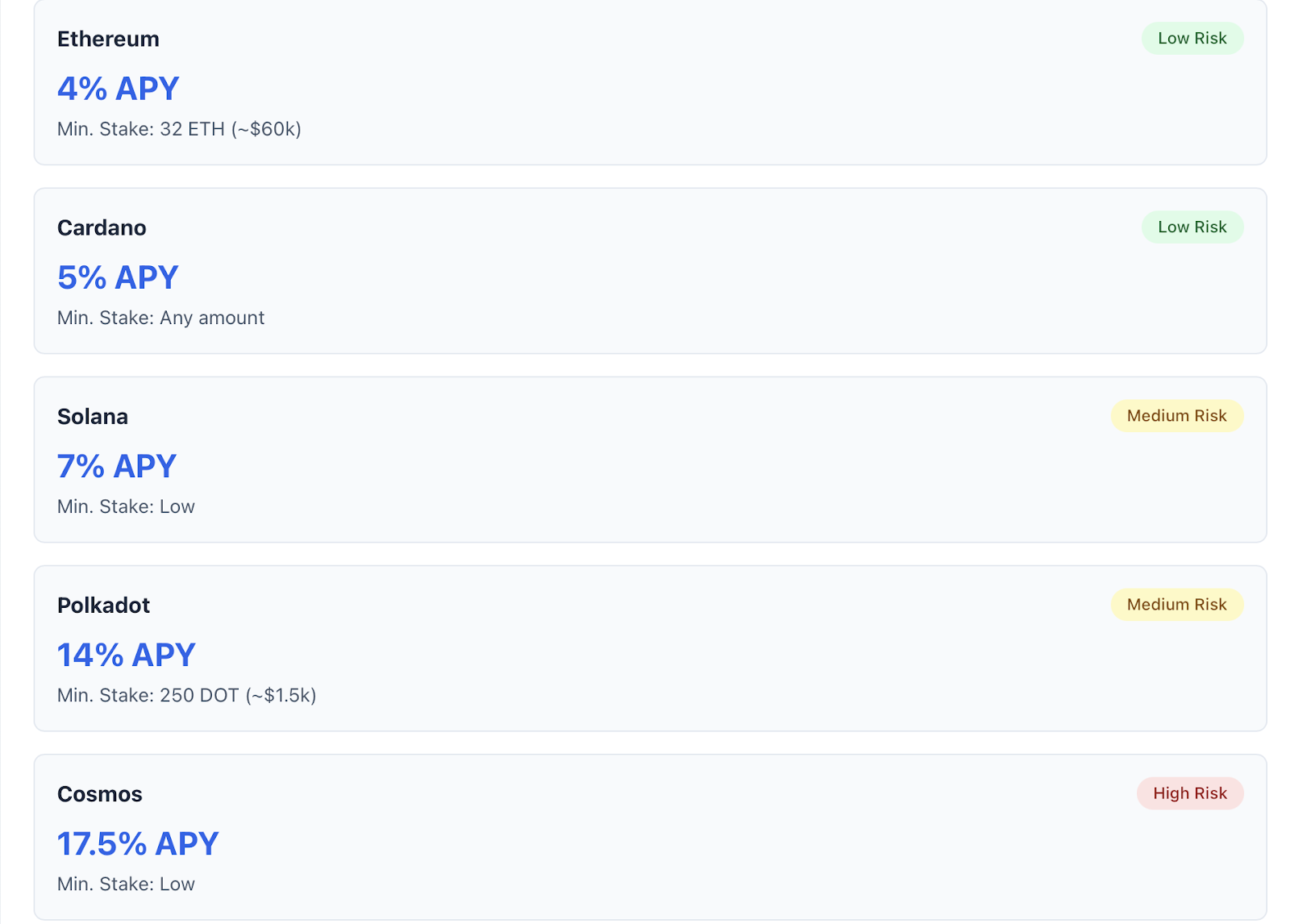
Honourable mentions are Cosmos (ATOM) with yields of 15-20%, Avalanche (AVAX) at around 8-10%, and Tezos (XTZ) with yields of 5-6%. Each network has different philosophies, technical approaches, and risk profiles.
For an inexperienced investor, beginning with Ethereum and Cardano makes a lot of sense. Both have proven to be good investments, large communities, and user-friendly staking options. More seasoned investors may be interested in some of the smaller caps that provide higher yields and are more willing to expose themselves to more risk for possibly more reward.
The most important thing is diversification. Do not just put your entire staking capital into one network coin. Spread across a few other quality PoS coins to balance yield, risk, and exposure to different technological strategies.
Risks and Considerations in PoS – What You Must Know
Staking is not a money without risk. Knowing the risks can help prevent you from making expensive mistakes.
At the top of the risk list is slashing punishment. If you are running your own validator and your validator misbehaves (goes offline too long, validates fraudulent transactions, or double-signs a block), the network will slash your stake. In Ethereum, a validator could lose anywhere from a percentage of their stake or even all of it in the circumstance of slashing based on how badly the validator behaved. For slashing punishment, this penalty, as described here, would only happen to solo validators and would not normally affect people delegating to an exchange or a staking pool validator. If you are staking through a staking pool, check the uptime and enough operational record of the pool before delegating to be sure that slashing won't affect you.
Besides slashing, market volatility is probably your 1 risk in real terms. Yes, you are getting 5% yield annually from the staked tokens. However, if the price of that token goes down 30%, then you have lost 25% of your total investment value in fiat. Staking does not help you in a bear market. Many other investors have been stuck in this situation, watching their staked tokens go down in value, locked away from selling. Because of these situations, calculate staking returns based on token amounts and fiat value for your staking activity. Don’t stake money that you might need for something in the near future.
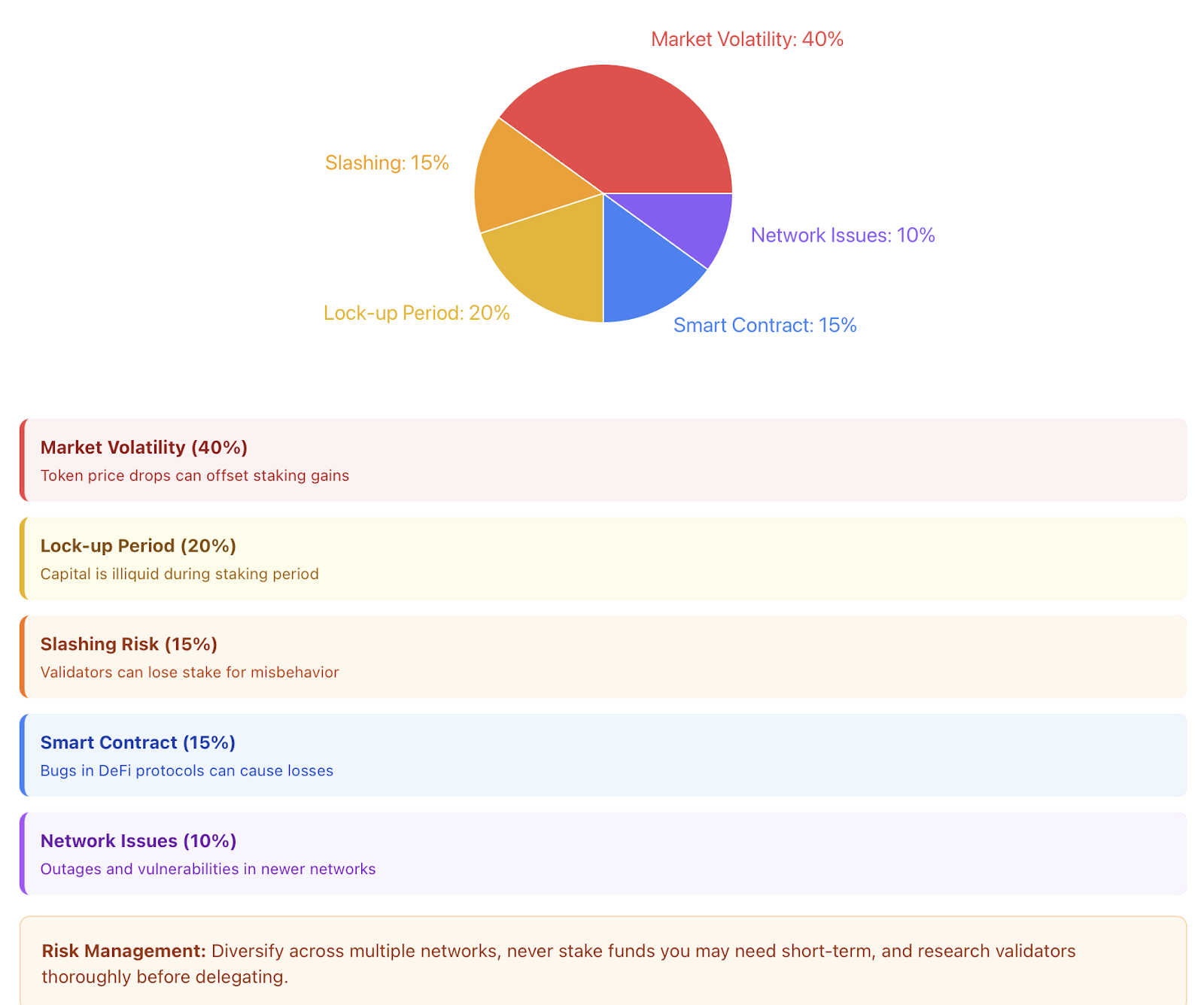
DeFi protocols built on proof-of-stake networks have risks associated with the use of smart contracts. Lending your staked tokens or using liquid staking derivatives adds another layer of technical risk. Since bugs in smart contracts can cost investors millions of dollars, stick with successful, audited protocols if following this path.
Network-specific risks are platform-specific. Newer proof-of-stake networks may be ripe with undiscovered vulnerabilities or flaws in their consensus mechanisms that they’ve not had enough time to test. Ethereum’s proof-of-stake model has been battle-tested for several years, but newer networks may have unknown issues to deal with. Network centralisation carries risks as well. When a small number of validators or entities control the majority of the staked coins in a network, that staked coin network is not decentralised.
The failure of the Terra network in 2022, which had a built-in Terra USD, is a cautionary tale. The Terra network offered staking on the Terra coin of approximately 20 per cent yields as the incentive, only to begin imploding two months later. The yields were too good to be true, and the entire network ecosystem imploded, causing everyone who staked to lose all their staked coins. Yields that are simply unsustainable signal a red flag. If a network offers dramatically better returns than existing staking coins, dig deeper to better understand why.
Lock-up periods create opportunity costs. Your capital is tied up and can't respond to market changes. If Bitcoin were to suddenly pump while all alts dump, reallocating from your staked positions can take time. Illiquidity takes planning and longer-term thinking into account.
Do your research, diversify, and expect to be wrong. Don't throw everything into the highest yield for 90 days. Stake an amount you are ok with holding for an extended period. Buy from and stake sites you are familiar with (strong security track record) and will likely still be there when you want your coins injected in the long run. Everything I mentioned is for the long game, not the sprint.
PoS and Decentralised Finance (DeFi) – Opportunities and Use Cases
It's traditionally understood that PoS networks are a bustling hub of the most advanced DeFi applications. Knowing that enables an additional earning mechanism on top of the basic staking mechanism.
Liquid staking derivatives are the answer to the staking lock-up issue. For example, when you stake ETH on Lido, you receive stETH tokens that signify your recently staked Ethereum. Those stETH tokens can be deployed into DeFi protocols while you still earn staking rewards from your original ETH. You are essentially earning a double yield by utilising your staked position in lending markets or liquidity pools. Rocket Pool provides a similar service. Liquid staking derivatives have now grown into billions of total value locked.
Yield farming on PoS networks takes it one step further by combining staking rewards with other DeFi incentives. If you provide liquidity to a decentralised exchange on a PoS network like Polygon, then you can earn TKN trading fees, MATIC token rewards, and possibly additional TKNs from the DEX as well. All of these yield-producing ideas are likely to generate 20%-50% APY or more on your invested capital, but also come with wild risks of impermanent loss in addition to smart contract risk.
Polkadot's parachain auctions showcase an additional innovative offering. Projects compete for parachain slots by locking DOT tokens. Also, you can participate in crowdloans, essentially backing a project that pools funds from participants to secure a promising slot within the parachain auction. If the project successfully secures a slot, then you are rewarded the project's native tokens, as outlined in the crowdloan terms. After the lease period expires, which typically lasts around 24 months, you receive your DOT tokens back. This incentivises early-stage access and exposure to new projects that are actively developing on the Polkadot network.
Governance engagement becomes possible through staking. A majority of Proof-Of-Stake networks award their stakers voting rights with respect to proposed protocol improvements and treasury expenditures. Your staked token(s) not only provide earning potential, but also govern the overall direction of the network. This representation is an additional, meaningful value to an investor who wishes to back the projects they are passionate about.
Cosmos engages in an interesting opportunity with IBC. Scope out staking the native token, ATOM, for securing the Cosmos Hub, while using the large Cosmos ecosystem related to DeFi applications that span across multiple chains. The integration of staking and DeFi feels more fluid than other networks.
The danger of all these strategies is that there is so much complexity. Every additional layer (for example, staking, then liquid staking, then farming with liquid staked tokens) adds additional smart contracts and potential failure points. Start with a simple approach. Start with learning staking and mastering it. When you feel comfortable and understand how it works, then become experimental and dive into more sophisticated DeFi strategies.
The real returns of combining PoS with DeFi can be formidable. A more conservative approach would be 8-12% annually through staking and lending. More aggressive strategies can aspire to 30-50% or more, but you would also be taking much larger risks for the reward.
How to Start with PoS – Step-by-Step Guide for Beginners
When you're ready to stake, here's what you'll need to do.
Step 1: Select Your PoS Coin
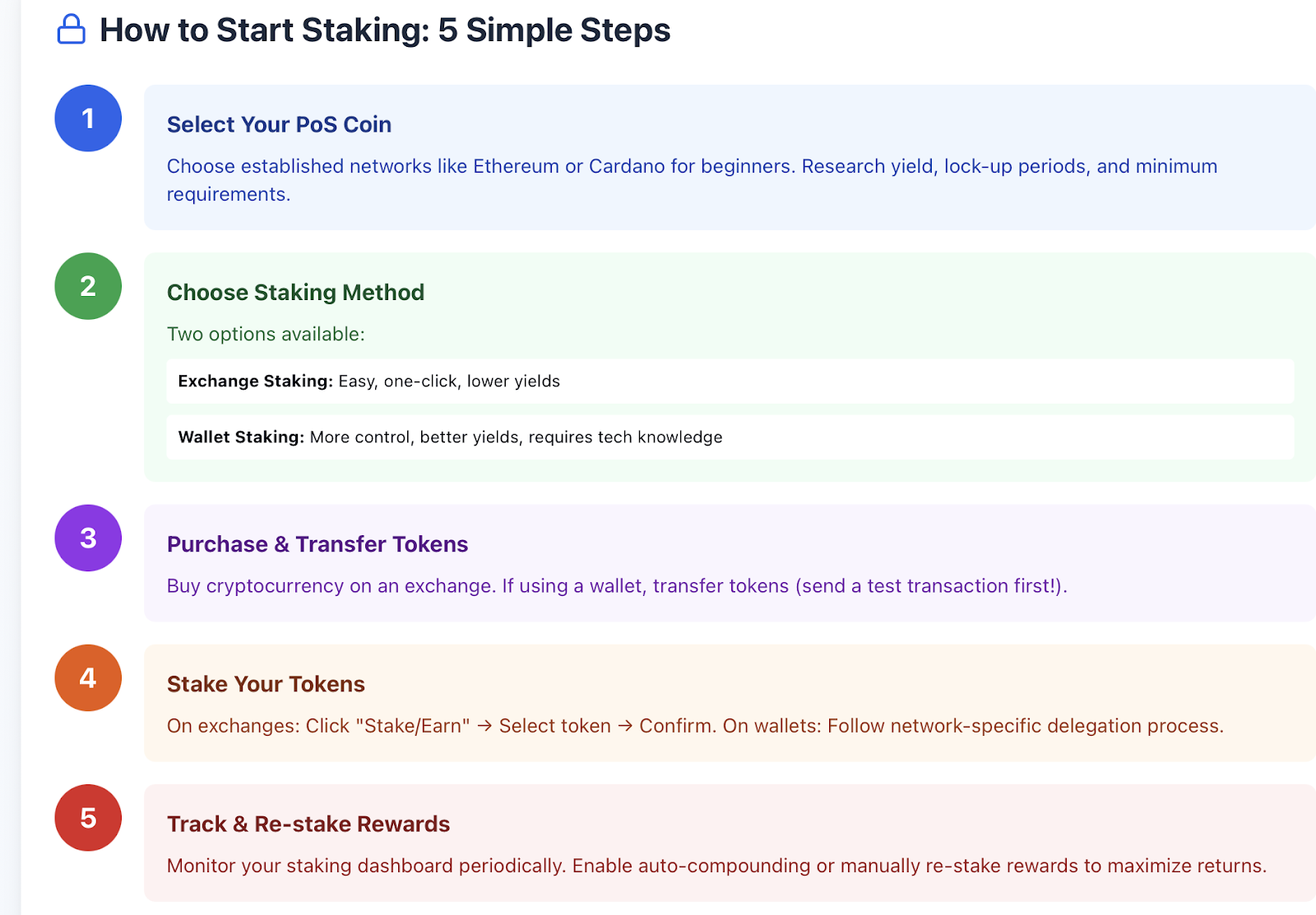
If you're new to staking, start with established networks. Ethereum and Cardano provide a great mix of security, ease of use, and decent yield. Research the network's staking "rules" such as requirements, yield, and lock-up period before staking.
Step 2: Choose Your Staking Method
There are two main options here:
Exchange staking is the easiest route! Coinbase, Kraken, and Binance all provide easy "one-click" staking for popular PoS tokens. You will earn slightly less yield as the exchange takes a cut, but you can't get any easier than this, and often, there is no minimum staking. Perfect for beginners.
Wallet staking gives you more control. If you are staking Cardano, download the Daedalus or Yoroi wallet. If you are staking Ethereum, use MetaMask and a staking service. You keep custody of your tokens, and this can yield slightly better returns in most cases. There is a little more technical knowledge needed, but it is still much easier than it sounds.
Step 3: Purchase and Transfer Your Tokens
Purchase your chosen cryptocurrency on an exchange. If staking via that same exchange account, you are done. If using a wallet, transfer your tokens from that exchange to your wallet address. Remember to first send a small test transaction to verify you have the correct address.
Step 4: Stake Your Tokens
On exchanges, go to the "Stake" or "Earn" button, select the token and amount, and confirm the transaction. The rewards will generally start accruing in a few days.
When using wallets, the process will vary depending on the associated network you are utilising. For example, to stake Cardano through Yoroi, you will click on the "Delegation List" tab and choose a stake pool based on performance and fees. Then you simply confirm the delegation. All of the funds in your wallet will be staked automatically, and you can send and receive ADA at any time without affecting your stake.
Step 5: Track and Re-stake Rewards
After staking your tokens, check back periodically on your staking dashboard. Most platforms have it listed how many rewards you are earning, the percentage yield, and when your next distribution date will be. Many exchanges will also take care of re-staking your rewards, but if they don’t, you should follow the staking process to maximise your rewards.
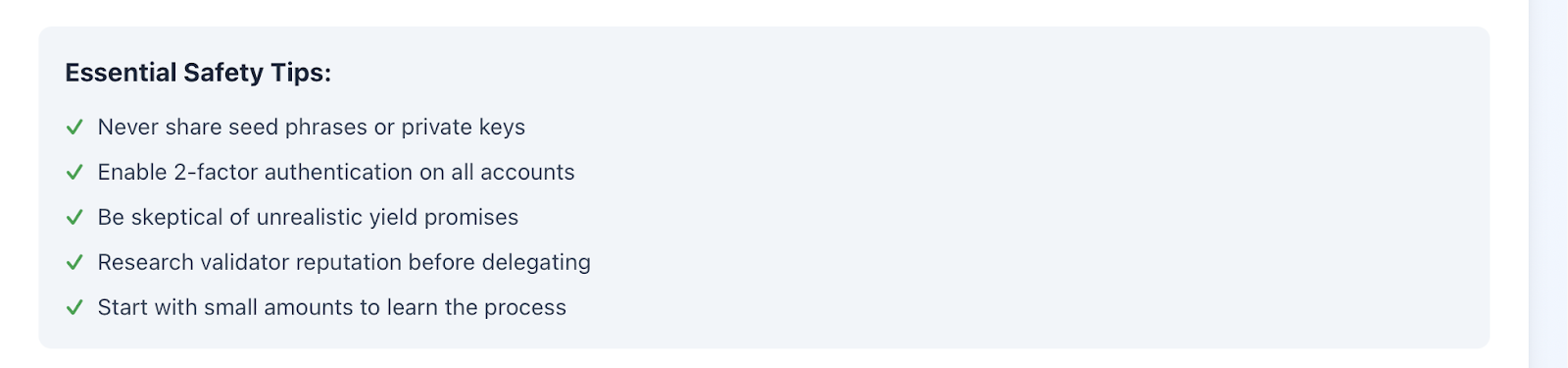
Essential Safety Advice:
Do not share your seed phrases or private keys with anyone. A legitimate staking service will never ask for this information.
Make sure you enable 2-factor authentication on all Exchange accounts.
Be cautious of returns that seem too good to be true. If it sounds too good to be true, it probably is.
Always do your due diligence on validators or staking pools before delegating. Check uptime, fees, and reputation in the community.
Start small. Use a small test amount as a stake so you get familiar with the process before committing lots of cash.
You can also run your own Ethereum validator node. This requires some technical knowledge and 32 ETH. You will have to run validator software on hardware that is up 24/7 with reliable internet. Rewards are higher for running your own validator, but you also have to be responsible. Most beginners should stick with delegated staking until they are very comfortable with the ecosystem.
The complete process of buying tokens to receiving your first rewards can take as little as a week. Staking is quite passive once you have everything set up. You can check in occasionally, but for the duration of the staking period, your tokens will do most of the work.
Take Control of Your Crypto's Future with PoS Staking
Your tokens can be idle, or they can work 24/7 and generate real returns. The PoS revolution isn't coming – it is here, generating networks worth hundreds of billions and providing returns that traditional finance cannot match. Start staking with just one position, watch rewards accumulate, and see why smart holders stake instead of holding.
Ready to put your crypto to work? Join btcdana.com today and access professional staking tools, real-time yield tracking, and expert guidance to maximise your PoS rewards.