



From Wall Street to Web3: The Birth of DeFi
Traditional finance has functioned similarly throughout history. Banks hold your funds. Clearing houses execute your trades. Custodians keep your assets secure. All transactions are routed through centralized players with institutional authority over the transaction. You place your trust in these institutions to move your funds, confirm your identity, and settle your trade.
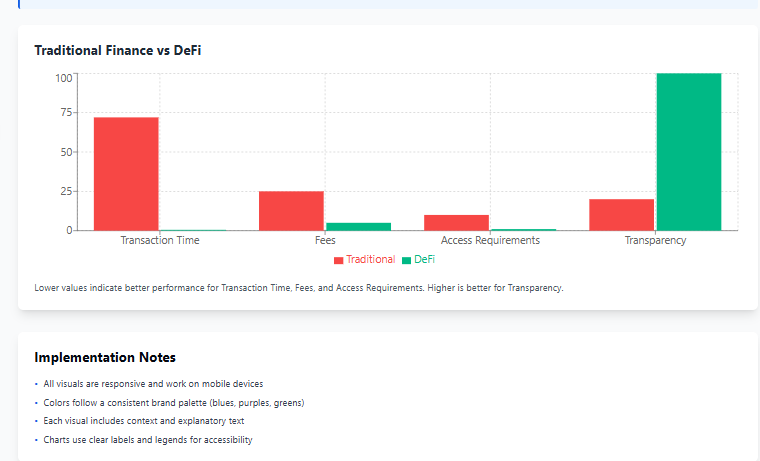
And this system has risks. International transfers through SWIFT can sometimes take 1-3 days. Fees are charged at each step. Billions of people do not have access to basic banking services. Institutions with authority govern all aspects of the system.
The 2008 financial crisis shattered any confidence creditors had in banking institutions. Major banks collapsed. Governments were required to intervene with bailouts. Asset prices fell; people lost savings. Trust in the financial system plummeted. An alternative was required.
Bitcoin became the first alternative in 2009. Bitcoin introduced blockchain technology - a ledger of transactions that would not require banks. Anyone could send value directly to anyone else. No intermediaries involved. The foundation was established.
Blockchain fulfilled a greater purpose than simply transferring value. Bitcoin was followed in 2015 by Ethereum, which introduced the capability of smart contracts - programs that operate automatically once code-driven conditions are satisfied. Self-enforcing agreements became possible. Developers could create financial services that operated on math and code instead of a hierarchy of corporations.
Decentralized Finance originated from these innovations. DeFi reimagines nearly every financial service without centralized authority. Lending, borrowing, trading, investing - all done exclusively through public blockchain with transparent and open source code. You own and control your assets directly. The code governs the rules. No third party bank can freeze your account or collude to reach backroom deals to your detriment.
This is a major shift. Traditional finance says "trust us," and DeFi says "verify the code." Where banks operate behind closed doors, DeFi protocols operate outdoors. Anyone can audit the code that governs the smart contracts and each transaction is permanently recorded on the blockchain. Bureaucratic processes are replaced with transparency.
A simple analogy illustrates the differences. Want to swap currencies internationally through a bank? Expect the process to take days and incur significant fees. Want to swap tokens on Uniswap? Done in seconds, with a single transaction fee. There is a massive difference in efficiency.
DeFi is more than just fast transaction and settlement times. It is about access and control. You don't need permission to use DeFi; there are no credit checks and no minimums. You are not discriminated against based on your country of origin, you simply need a wallet and an interconnection.
The Tech Behind DeFi: How Blockchain and Smart Contracts Power It All
Blockchain is the backbone of decentralized finance (DeFi). Imagine it as an open ledger that everyone can observe but no one can change. All transactions are recorded inside a "block" of information. All of these blocks are chained together, hence the name blockchain. Once something is inscribed into the blockchain, it stays there forever. There is no deleting. There is no modifying. It is entirely open and transparent.
This ledger is not stored in one centralized location. Rather, it is copied across thousands of computers worldwide. This ledger is not controlled by a single entity. If one computer shuts down, the network persists through thousands of other computers. There is no government or corporation that can stop this system. It just continues to work.
Smart contracts are a further development of the blockchain idea. Smart contracts are programs that exist on a blockchain and are enacted automatically. You create the conditions: "IF Alice sends 100 tokens, send her 1 ETH." The smart contract monitors the blockchain, and when it sees that the condition has occurred, it enacts automatically immediately. There is no delay. There is no need for a person to act to execute the contract.
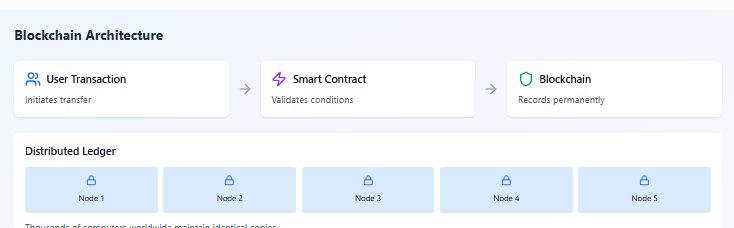
You may think about smart contracts, in relation to the blockchain, as a prepared vending machine. You put coins in, select the item you want, and the vending machine will deliver the item automatically. You do not need a cashier. The vending machine does exactly what it was programmed to do. Smart contracts work similarly to financial transactions. You put in tokens, and you receive value. The code cannot cheat you.
Ethereum emerged as the leading DeFi platform because it allowed developers to write smart contracts using the EVM. Developers could write complex financial logic in smart contracts and trust the network to execute that logic on-chain. From a user perspective, users interact with smart contracts immediately via their wallets, and all DeFi protocols use smart contracts for everything. Aave's lending protocol automatically connects borrowers with lenders, and all the user needs to do is set the terms and deposit their asset. They would then let the smart contract execute the rest. Interest is even accrued in real-time. If, at any given time, the collateral becomes too low, the automated smart contract liquidates the user, and does so preferably automatically. In other words, DeFi systems execute themselves automatically based on some defined logic and the app code.
Still, this technology is imperfect. For starters, usage tends to congest the Ethereum blockchain. When usage spikes, the transaction fees can jump to $50 or more. Heightened transaction fees lead to more limited accessibility for smaller, retail users. And because the underlying blockchain technology processes transactions slower than would a standard database, the transaction will take even longer.
Scalability solutions have been developed to address these issues. Layer 2 networks, such as Arbitrum, Polygon, and Optimism, process transactions off of the main Ethereum blockchain. They batch thousands of transactions together and submit these batches to Ethereum for processing. This means users are still able to experience near speed and lower fees, all while solving for custodial and transactional security through the security of Ethereum.
These technology building blocks provide the basis for DeFi's core proposition: financial services without a financial intermediary. The blockchain provides a transparent, immutable, and verifiable record. Smart contracts enable automation of agreements. Users can interface directly with the protocols. Trust shifts from institutions to an algorithm. You do not have to trust their promise. You can read and audit the code, and therefore trust and understand exactly how they function.
Inside the DeFi Ecosystem: The Building Blocks of Digital Finance
DeFi functionalities like financial LEGO. Each protocol is a block. Users stack protocols together to create bespoke financial systems. The pieces fit, because they all operate on the same underlying blockchain.
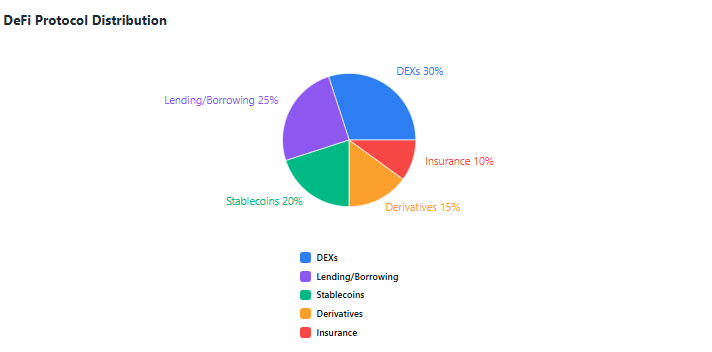
Decentralized Exchanges (DEXs) let you trade tokens without intermediaries. Uniswap established the automated market maker (AMM) model. Rather than matching buy and sell orders, liquidity pools contain pairs of tokens; smart contracts calculate prices based upon the ratios of each token held in the pool. You can swap anytime, instantly. Other DEXs like SushiSwap replicate the same mechanics.
Uniswap v3 showcased concentrated liquidity, which offers the ability to concentrate liquidity within a specified price range for liquidity providers. Concentrated liquidity allows for more efficient market making with higher returns for liquidity providers. This serves as an example of how DeFi protocols are consistently iterative inventions.
Protocols like Save and Compound enable individuals to borrow and lend, without banks. Deposit your crypto and earn interest. Use crypto assets as collateral in an overcollateralized manner, to borrow against an asset. Smart contracts range, which alters on a continuous basis, usually derived from a protocol’s supply and/or demand. No credit checks. No loan officers. Just code.
Stablecoins offer a bridge to crypto volatility with stable values. USDT, USDC, and DAI all remain pegged one-to-one to the US dollar. They offer the stability required to conduct everyday transactions and trading. DAI is particularly interesting as it is decentralized and backed by crypto collateral rather than US dollars in a bank account.
Yield farming and liquidity mining allow participants to earn a return while providing liquidity to yield generating protocols. Supply tokens to a liquidity pool on Uniswap. Earn a share of the trading fees every time a swap occurs with your liquidity. Some protocols may reward providers with their own native protocol token as well. Users can stack multiple yield strategies to maximize returns.
Derivatives protocols bring advanced trading techniques to DeFi. dYdX offers perpetual contracts with leverage. GMX offers decentralized perpetual trading with low fees. These platforms offer many of the same products as a derivatives market, but without a centralized broker. Traders of derivatives are given leverage and hedging tools, only now the contracts are settled on-chain.
Insurance protocols like Nexus Mutual allow users to buy insurance against the risk of smart contract failures. You simply buy coverage for a given protocol, and if it becomes hacked, you receive compensation. Other users provide the capital to back the insurance, but receive the premiums. Risks are distributed across the community.
All these connections work together in an open financial system. You can deposit a stablecoin on Aave, borrow against it, exchange it for another coin on Uniswap, and provide liquidity to earn yield all in a matter of minutes. These protocols work together effortlessly. All you need is your wallet to be the interface.
It is a biological and organic innovation. A developer might build a new protocol that plugs into the existing infrastructure. Users can discover and use interesting combinations. The system evolves organically without the need for central planners to inform its direction.
The Rise of CeDeFi: When Centralized Exchanges Meet Decentralized Finance
CeDeFi combines centralized and decentralized finance. Leading exchanges, such as Binance, Kraken, and OKX, already recognized the potential of DeFi, and proceeded to add DeFi products to their platforms. Users can receive DeFi returns, while remaining in environments much more familiar to them.
For example, Binance Earn gives users the ability to stake or yield farm through a simple dashboard. You don't have to juggle alternating wallets or platforms to navigate different protocols. Binance does all the heavy lifting. You simply choose your investment strategy and deposit your capital into the platform. Then, the exchange performs the work to interact with the DeFi platforms, and programmatically stakes or yields the return for you.
Kraken provides comparable services for DeFi staking. The interface was designed to strip away what would normally be an experience requiring technical understanding and knowledge. New users can access the DeFi world without some of the cartilaginous and burdensome learning curve that comes with diving into DeFi. The exchange manages all of this for you, thus all you have to do is follow the process of setting up an account
This hybrid model has clear benefits. You get potentially higher returns than simply placing your money into a standard savings account, and the user experience is arguably on par with traditional banking applications. In addition, you know that you are working with a regulated exchange, which provides a layer of trust and security, not to mention they have customer support available in the event anything were to happen.
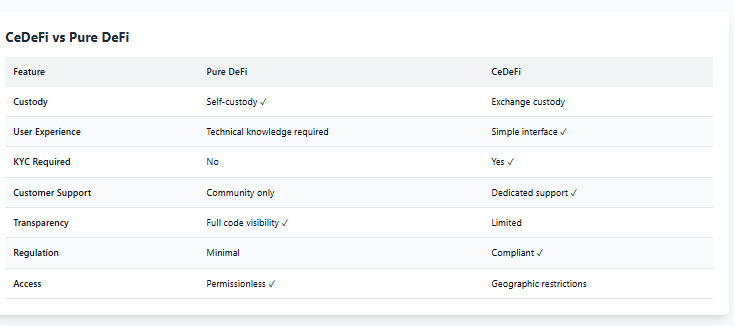
CeDeFi products address a significant gap. Many relatively (and dishonest) investors would rather participate in the DeFi world, however the technical and operational component keeps them from participating. Setting up wallets, private keys, and even gas fees are all requirements to navigate DeFi, and keep tens of millions of people off the table, and participating in the DeFi world. The CeDeFi World removes the friction.
There’s a trust tradeoff. You relinquish your assets to the custody of the exchange. They have control over private keys. You are back to trusting an institution instead of trusting code. Your promise of decentralization is diminished. You achieve convenience but lose self-sovereignty.
Users have different needs. DeFi purists want transparency and full control. They'll control their wallets and interact with the protocol directly. Mainstream users want ease of use and security. CeDeFi works well for them. Both a DeFi and CeDeFi world can exist.
CeDeFi also addresses compliance. The exchanges must comply with regulations. They will enforce KYC and AML procedures. So institutional investors feel more comfortable. The DeFi anonymity raises regulatory issues. CeDeFi provides a compliant on-ramp.
This type of model signifies the evolution of DeFi to reach the masses. Pure decentralization is appealing to the crypto native. Most individuals want incremental steps. CeDeFi is a bridge between innovation and accessibility. It ties the trust of centralized exchanges with the transparency of DeFi in a reasonable way.
The Dark Side of DeFi: Common Risks and Vulnerabilities
DeFi has significant return opportunities. However, that can be accompanied by substantial risk. Smart contracts may have bugs and unwanted behavior, and hackers can take advantage of those weaknesses. The DAO Hack in 2016 illustrated this in the largest manner: attackers exploited a vulnerability to take $60 million in ETH. The Ethereum community had to fork the blockchain in a matter of hours to stop the loss from happening any further.
In addition, any form of a rug pull is a potential risk. Developers create a new token, gain some traction from customers, then drain the liquidity pool and disappear. In a short time, the project disappears overnight and the investors are left with nothing. While these exit scams happen all the time, especially with new projects that have not been audited yet.
There is also the risk of an oracle manipulation attack. This attack occurs when the price feeds are distorted that are used to inform the DeFi protocol for the value of the assets. An oracle can bring off-chain data to the blockchain. In these instances, when the price feeds are being manipulated, hackers can securely trick protocols into mispricing assets. They can then profit off the discrepancy as users of the contracts were able to incur and suffer losses.
So thinking of putting your money in DeFi, is similar to using a robot bank. The robot is programmed to handle your money and make financial decisions for you. However, if hackers simply find a way to add back doors into the code base, it doesn't stop the hacker because it has no way to understand based on its programming that there is an external actor stealing from customers.
The incident involving Curve Finance in 2023 illustrated these risks in action. A vulnerability in the Vyper programming language entirely affected a number of pools. Attackers exploited the vulnerability and drained the protocol of millions of dollars. Users providing liquidity also lost their funds. The protocol itself continued without pause but trust had been violated.
You can mitigate risks with good procedures. DYOR - Do Your Own Research. Read the project whitepapers, and really know what the protocol is doing and why. See if reputable firms audited the smart contracts. Audits do not guarantee safety with 100 percent certainty, but do catch many common vulnerabilities that do not come up in hacking scenarios.
Diversifying limits your exposure. Don’t have all your funds in one protocol. You should diversify across multiple protocols and strategies. If one gets exploited, it does not mean you lose all your funds. Position sizing is also a component. Only allocate what you can afford to lose.
Secure wallets are not negotiable. Hardware wallets should be used for larger portfolio holdings. Store your seed phrase offline and securely. Use multi-factor authentication if it is available for your wallet. Never share your private keys with others. Many hacks are executed by exploiting human error, not protocol vulnerabilities.
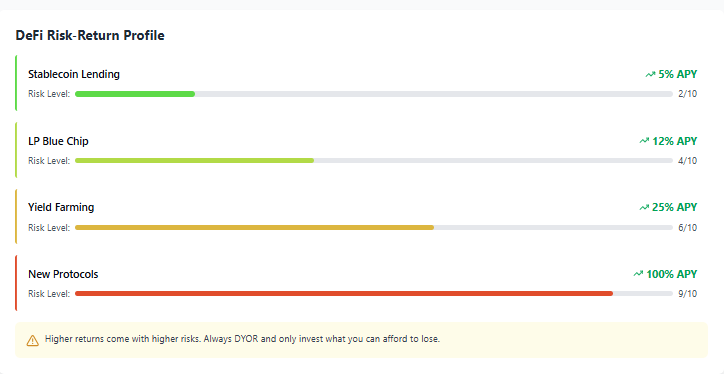
Follow established protocols with a good track record. Uniswap, Aave, and Compound have been around for years with billions in total value locked. They've been battle tested. New protocols might offer you much higher yields, but they come at much higher risk. Watch for yields that seem too good to be true.
If a protocol is promising 1000% APY, you should question sustainability. The yield is either from emissions of tokens that will eventually go away, or a lure for a rug pull. Reasonable yields associated with stablecoin strategies usually fall between 3-15% APY.All good things (including yield) come with risk. It’s an inherent trade off. DeFi presents opportunities that you simply cannot get in traditional finance, however; you are also exposed to smart contract risk, market volatility, and could even lose everything. Safety starts with doing due diligence and managing risk.
Regulation and Reality: How Governments Are Responding to DeFi
Governments across the globe are struggling with the regulation of DeFi. Technology often creates policies, or outpaces policy decisions about how to invent and effectively use the latest technology. Regulators are in a tough position: to promote and encourage innovation, or protect the consumer. Different regions have adopted different methodologies.
The SEC in the US considers many tokens related to DeFi protocols to be "securities." The SEC has taken enforcement actions against several projects. The core question is are the tokens investment contracts? Uniswap has been "called out" by the SEC regulators. The SEC questions the registrability of the protocol and its token. It creates uncertainty for developers and users.
The EU passed the Markets in Crypto-Assets Co-Regulation (MiCA). This regulates the licensing of crypto service providers by establishing disclosure requirements and general behavior standards. MiCA acts to protect consumers but at the same time enables innovation. Other MiCA phases will be implemented during 2024-2025. Your DeFi protocol will need to be licensed under MiCA or block all European users.
The Monetary Authority of Singapore (MAS) is prudent. They have developed a licensing framework specifically for crypto exchanges and crypto payment services. The MAS is fostering responsible innovation by establishing "regulatory sandboxes" that allow projects the opportunity to test state-of-the-art services while still being overseen by regulators. All new technology is at risk of being a little risky until fully operational. This collaborative and moderately rigid framework provides regulated parameters which makes Singapore attractive to crypto firms.
The FATF (Financial Action Task Force) sets the standard for crypto regulation around the globe. The FATF classifies many DeFi protocols as a type of Virtual Asset Service Provider (VASP) which places them under the KYC and AML umbrella. Protocols are required to identify users and report suspicious activity. This is at odds with the fundamental proposition for DeFi, which is meant to be permissionless.
First of all, this runs the ground of the challenges. How do you KYC a permissionless protocol? Smart contracts do not ask for any form of ID. Anyone with a wallet can participate. Introducing an identity requirement would change the essence of how DeFi works. Some protocols might find a way to create a KYC layer on top of their protocol, however most will remain completely open.
KYC is concerned for regulators because of concerns over anonymizing criminal activity. A regulating body is concerned that users will utilize DeFi as a vehicle for money laundering and terrorist financing. Trusting traditional banking is predicated on understanding who the customer is. DeFi's ability to facilitate pseudonymous transactions jeopardizes that trust. Law enforcement has limited access to data from DeFi platforms. Balancing privacy and compliance obligations will be shaping the future of DeFi.
Differences in regulatory frameworks creates increased regulatory arbitrage in the DeFi space. If a regulatory body in one country prohibits the use of a DeFi protocol, such a project will be established in a more regulatory friendly jurisdiction. Users will access DeFi protocols utilizing any VPN. Understanding the decentralized nature of DeFi makes regulation and supervision challenging. Regulations that apply to a centralized trading exchange may not apply to DeFi protocols.
Some people regard regulation as the enemy of innovation, while others see it as a prerequisite for widespread adoption. Institutional investors need clarity around the legality of things when they start to deploy billions of dollars into unregulated protocols. What counts as a legitimate protocol and what doesn't? Clear guidelines will help weed out the scams from the legitimate projects and create confidence.
Regulation is not the enemy; it is the path to DeFi's adoption by the mainstream. As a question of regulation comes to the forefront, the question is going to be what kind of regulation. Heavy-handed regulations could kill innovation in the DeFi space. However, smart regulations could help provide consumer protections while still keeping the core benefit of DeFi: user agency. Just what type of regulatory path governments will choose is yet to be determined in the next few years.
DeFi Meets Traditional Trading: The CFD and Forex Connection
DeFi derivatives resemble traditional finance products. Contracts for Difference (CFDs) and forex have been around for decades. DeFi brings these products on-chain with some improvements. For example, Mirror Protocol offers tokenized real-world assets like stocks. You can have a synthetic version of an Apple or Tesla share on the blockchain. No broker required. Everyone can trade globally, 24/7. The oracles track the synthetic asset price to the price of the real-world stock. A trader can gain exposure to a stock without ever buying a share.
Similarly, dYdX offers perpetual contracts available to the trader that are somewhat similar to what a traditional broker and only limited to those involved have today. You can trade various crypto assets with leverage up to 20x, taking either long or short positions. The contract never expires, and settlement happens on-chain, without a central clearinghouse that takes custody of your funds. You are in control of those funds all the time.
These platforms increase access to the products of leverage, in ways that traditional brokers may use to limit access. Significant minimum deposit amounts, credit checks and identity verifications can limit a trader’s options traditional brokers can provide based on where a trader lives. In DeFi derivatives there are no limits on access, and if you have a wallet you can trade. This can level the playing field.
The similarities to CFD markets are evident. They both allow a user to speculate on price changes without the ownership of the underlying asset in a financial contract. Both provide leverage to magnify gains and losses. The main differences are custody and transparency. CFD brokers hold your collateral, while DeFi protocols use smart contracts to escrow your capital. The user can independently verify the code and withdraw anytime.
The same is true for forex trading, as it is making its presence in DeFi as well. Protocols are beginning to develop decentralized forex synthetic markets. Forex traders will be able to trade currency pairs, directly without the need for centralized exchanges. Liquidity pools will replace market makers and smart contracts will settle trades. Portions of the $7 trillion dollar per-day forex market could migrate to an on-chain presence.
This convergence creates a different opportunity. Traders will be able to utilize DeFi yields alongside leverage. Traders will be able to collateralize stablecoins on perpetual contracts and earn interest on their margin. They can compose trading strategies that they could not consider in a more traditional environment.
BTCDana believes in this convergence. The platform offers a synthesis of crypto and traditional trading. It allows users to trade CFDs, forex and crypto from one interface on the platform. The hybrid solution maximizes the user's trading experience. Users will have access to DeFi innovations alongside products and services they are accustomed to.
DeFi is blurring the lines between crypto and traditional trading. The decentralization of the technology removes barriers and costs, while enabling users to experience greater transparency and control. Some brokers will be forced to adapt or lose revenues. The future will reward brokers and trading platforms that offer the best of both worlds.
The Future Is DeFi 2.0: Tokenizing Real-World Assets
DeFi 2.0 signifies an extension of the concept of decentralized finance, which began by using mercenary liquidity. Users would bounce between protocols trying to find the highest yield. Projects struggled to maintain liquidity. DeFi 2.0 introduces protocol owned liquidity where liquidity and sustainable tokenomics are concerned.
OlympusDAO was the first major protocol to use protocol-owned liquidity. Instead of renting liquidity from users, the protocol can buy and own it. This creates stability for liquidity and overall incentives. Other projects have followed suit, and the model has shown to have more viability than the liquidity incentives seen through yield farming.
However, the more exciting piece of this story involves tokenizing real-world assets (RWA). Until now, DeFi has been primarily about crypto-native assets. RWA represents the use of non-crypto native assets and puts them on the blockchain. Real estate, bonds, commodities, private credit can all be tokenized and traded on a DeFi protocol.
MakerDAO has recently added U.S. Treasury bonds as collateral for DAI. This allows yield to come into DeFi from traditional finance. The stablecoin is backed by a real world asset and not just crypto. The protocol earns a stable return while the user has a more resilient asset for backing their stablecoin.
Ondo Finance has created tokens for bonds and structured products. A user can purchase fractionalized shares of a bond portfolio. The user then trades those tokens on-chain. Settlement happens instantaneously. Etc. and so on. The traditional bond market is notoriously slow and requires a large minimum. Tokenization allows users access to bonds that weren't available before.
Centrifuge links real-world assets with DeFi liquidity. Asset originators are able to tokenize invoices, real estate, or any number of other assets. DeFi users provide the funding and the protocol handles verification and settlement. The result will be to open DeFi capital to real economic activities outside crypto speculation.
The scale is enormous. Real estate alone is hundreds of trillions of dollars worldwide. And most of it is illiquid. Tokenization creates a 24/7 market. People can own fractional ownership. For example, a $1 million property could simply be divided into 1 million tokens and a million people could each own a part.
Corporate bonds, private credit, commodities, art, intellectual property... the list goes on. We can probably tokenize nearly any asset. DeFi protocols can provide trading, lending, or derivatives on these assets. Blockchain enables transparent verifiable ownership and instant settlement.
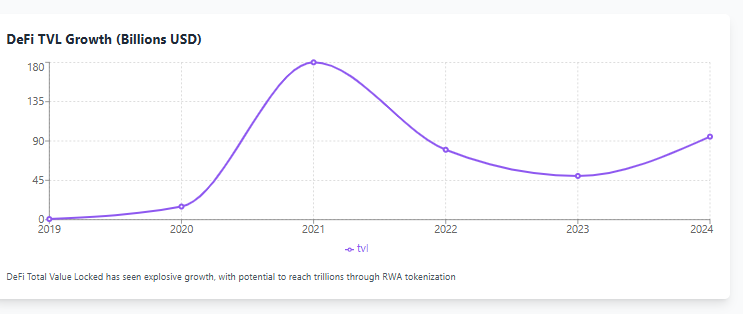
DeFi's Total Value Locked (TVL) has been in the range of $40 billion and $200 billion in the last few years. With the growth of Real World Asset tokenization, TVL can reach trillions. Institutional investors are starting to enter this space. For example, BlackRock has tokenized funds. Large banks are testing using blockchains to settle transactions. DeFi 2.0 connects blockchain to the real economy. This opens a trillion-dollar market. The technology is no longer crypto-related. It can act as infrastructure for all financial assets. Global finance could run everything on blockchains. The implications are huge.
Getting Started with DeFi: A Beginner's Step-by-Step Guide
Starting with DeFi is pretty straightforward. You'll need a wallet to hold your crypto, some crypto to put in your wallet, and a basic understanding of how protocols interact with your wallet. Here's how to start safely.
Begin by setting up a wallet. The most prevalent browser extension wallet is called MetaMask. Download it, create a new wallet, and write down your seed phrase and put it in a safe place. For good measure, write it on paper and keep it somewhere safe. You may never want to share that seed phrase with anyone. That seed phrase is your master key. If someone has it, they control your funds.
Next, buy some ETH from a centralized exchange like Coinbase or Kraken and transfer it to your MetaMask wallet. You'll need the ETH for transaction fees, also called gas. Start with a small amount of ETH for the learning phase ($100-500 is sufficient for experimentation).
After you've funded your wallet with ETH, go to a DEX like Uniswap and connect it. The website will prompt you to connect, click connect and approve it in MetaMask. You are now interacting with a DeFi protocol! You can see the token pairs available to swap tokens. I suggest you try at least one small swap (in the range of $1-$10) just to have the experience of performing the swap.
If you want to earn fees, the next step is to add liquidity. Pick a token pair and deposit equal dollar amounts of both tokens in the liquidity pool. In exchange, you receive LP tokens (Liquidity Provider). LP tokens represent your ownership share in the liquidity pool, and you collect an amount of fees from every trade that occurs in the pool. You can redeem this liquidity anytime you like by using the LP tokens to withdraw your liquidity from the pool.
It is extremely important to do your own research before using any protocol. This means you should read the project's white paper or documentation. You should understand what the protocol is, and how it helps you generate yield. Along with understanding how it works, you should check that smart contracts have been audited. Look for audits and reports from firms like Trail of Bits or ConsenSys Diligence, or others out there.
You should also examine communities. There should be an active Discord or Telegram channel, as a sign of community engagement. Check the project's Twitter to read how much engagement they respond to issues. Stay away from any project that has an anonymous team or is not audited, it's a sign of rug pull.
Tools exist to track activity in the DeFi ecosystems. There are tools to track the total value locked (TVL) across protocols - such as DeFiLlama, which also allows you to see which protocols are growing. DappRadar tracks usage statistics for certain protocols and Token Terminal tracks financial metrics around protocols. These tools will help you make better decisions about where to go to earn yield.
Start small and learn as you go. You don't want to invest your life savings in week one. Experiment with tiny amounts. Mistakes are fine as long as you do it on a small scale. As the mechanics come easier, you can start increasing position sizes. The learning curve is real, but it doesn't have to be so difficult.
Be reasonable when waiting to transact and watch for fees. Ethereum gas fees are often higher when things are busy. Sometimes you can save $20-30, if you wait an hour or so before transacting. Once confident in the basics, consider Layer 2 networks with cheaper options.
Most importantly, security is key. Always use hardware wallets or a safer wallet for larger amounts. If anyone asks for a seed phrase or private keys, be suspicious. Phishing is common and be sure you are at the correct URL for the protocol you are on.
There are communities to be a part of and places to ask questions. Most do-it-yourself finance projects have helpful communities. People who write code love to share knowledge and help any way they can. Ask simple questions, don't be shy. Everyone starts somewhere and we are all new at something at one point.
If you are interested, explore DeFi projects today. There is a ton of potential and time invested now will pay dividends in the future. Each protocol you try will help in some way. The skills you learn today will provide your foundation for the future of the finance world. Lastly, if it can help you trade smarter than options like BTCDana exist to bridge traditional to decentralized or alternative finance.
Venturing into DeFi uncovers financial instruments that were not available ten years ago. You are in control of your financial assets. You are in control of your financial strategies. You can partake in an open financial system. The learning curve is worth the effort and time. Get started today.
Ready to explore the future of trading? Join BTCDana today and access both traditional CFDs and cutting-edge DeFi opportunities from one powerful platform.