



What is Unrealized Profit/Loss?
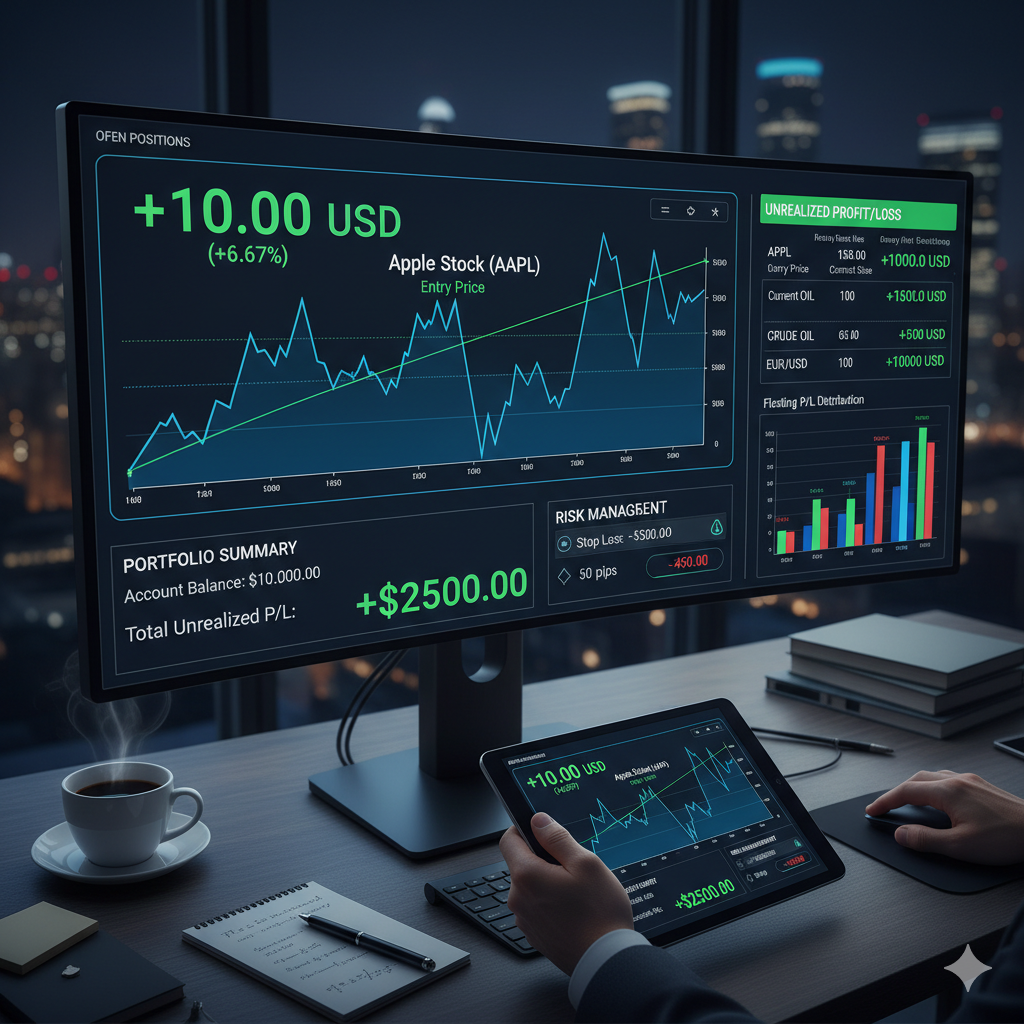
You buy Apple stock for $150 and then it rises to $160. You've made a $10 gain per share, but you haven't sold yet. That $10 gain is your unrealized profit, otherwise known as floating P/L (profit/loss).
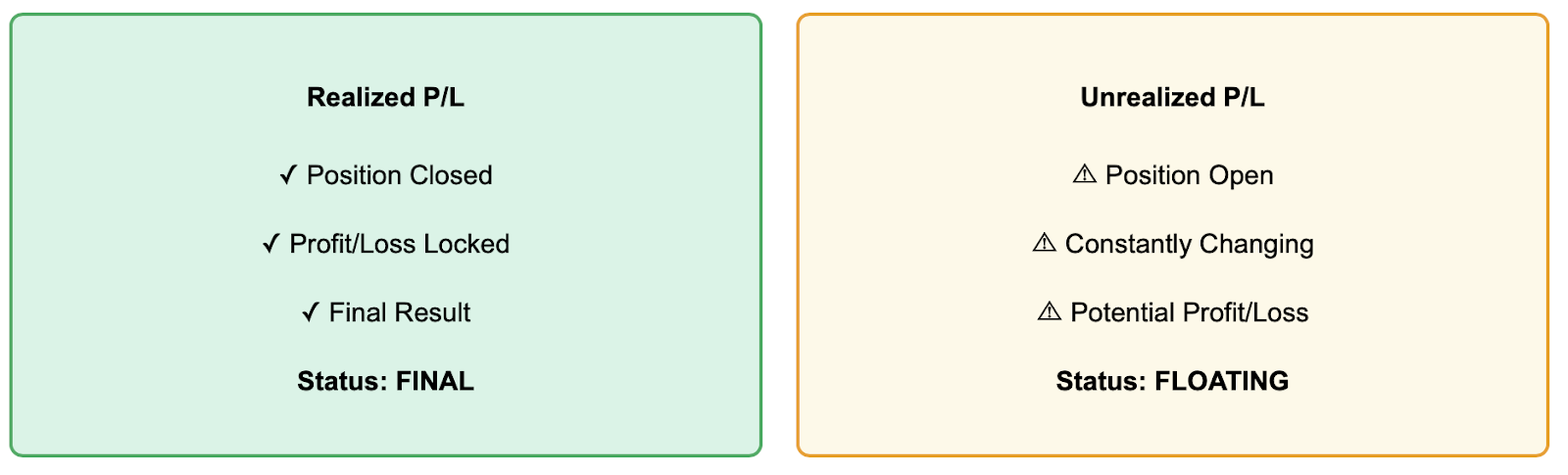
When you are trading with CFDs (contracts for difference), unrealized profit/loss shows the potential profit or loss on your open positions. "Potential" is the keyword here, as these values continuously fluctuate with each second the market moves. Unrealized P/L floats with markets prices whereas realized I'd profit/loss (the money you have truly made or lost when you close a trade) does not float.
You can think of with your unrealized profit as being similar to enjoying your favorite sports team with a 10 point lead at halftime. Regardless of your point total, neither team has won the game yet, and that lead could evaporate before the outcome is actually determined. All the while your unrealized profit floats until you decide to close your position locking in the actual result.
For CFD traders, observing this floating P/L is not an option, it is required. You need to know exactly what you have in unrealized or floating profit/loss if you are serious about your trading strategies.
This can only help you carefully navigate when you need to close positions based on the financial position you are in, as well as adjust strategy or discovery another opportunity to join the market with your capital.
Understanding the Numbers Behind Floating P/L
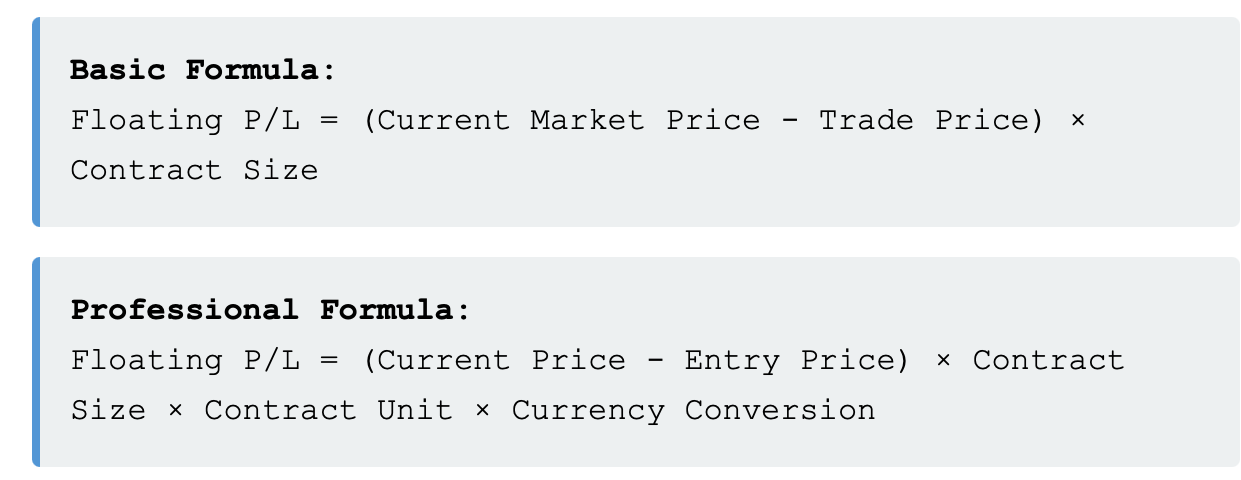
The calculations for unrealized profit or loss are simple: Floating P/L = (Current Market Price - Trade Price) x Contract Size.
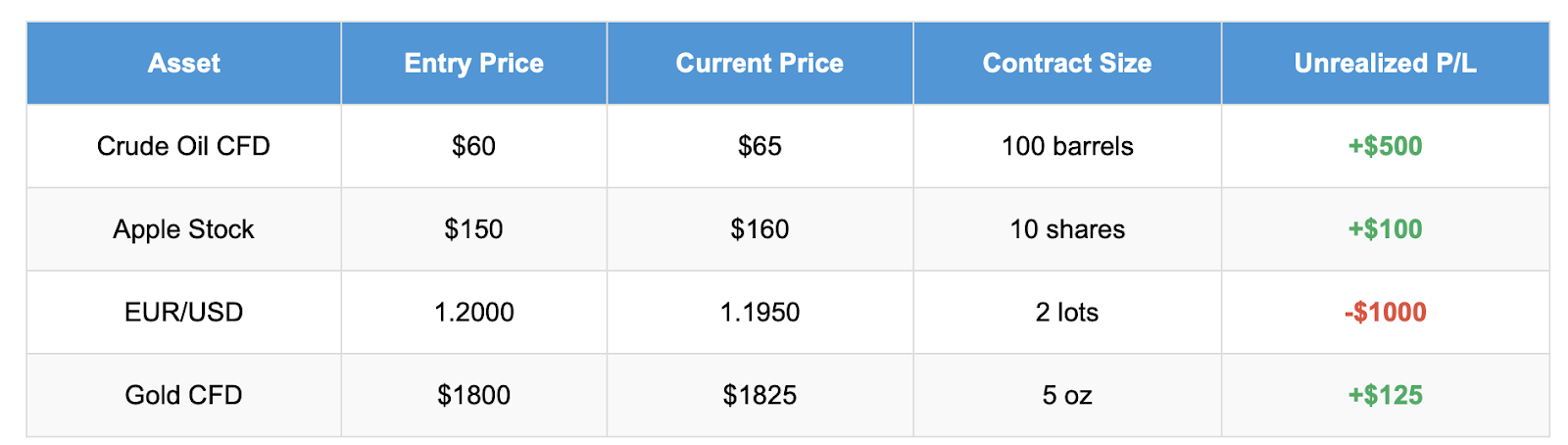
Let's illustrate this with a concrete example. Metaphorically you purchased a CFD on crude oil priced at $60 per barrel, and now that price has risen to $65. If your contract was for 100 barrels, your unrealized profit is ($65 - $60) x 100 = $500.
For those of you not as financially minded - think smaller. You purchase 10 shares of a stock priced at $20. The price of the stock has since risen to $22. In this case, your unrealized profit is ($22 - $20) x 10 = $20.
Now it is also important to consider direction in this. If you are long (purchasing), rising prices create unrealized profits and decreasing prices create unrealized losses. If you're short (selling), it turns around.
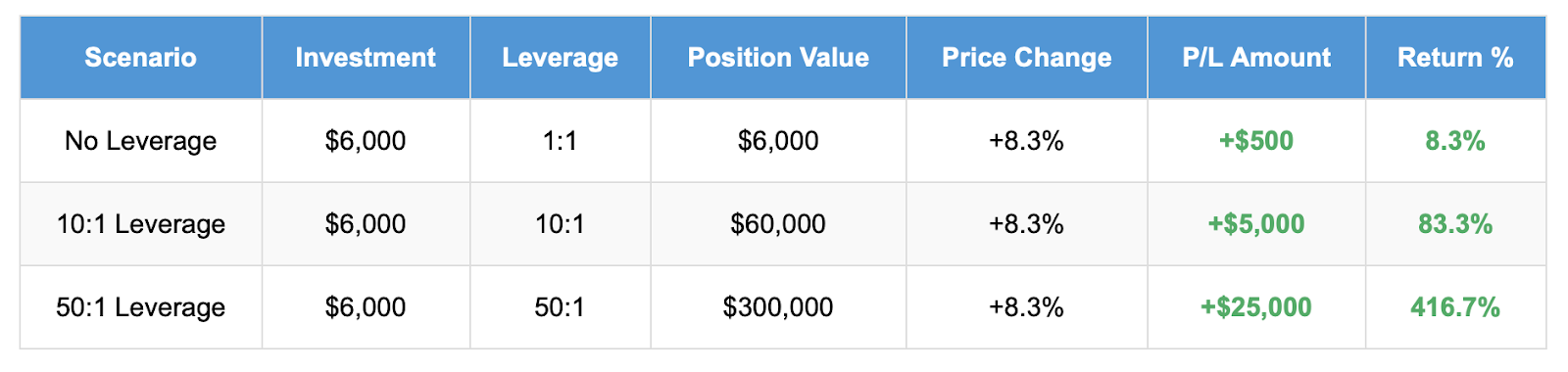
What is interesting with CFDs, versus stocks is leverage amplifies all these calculations. People trading with 10:1 leverage would only put up $6,000 of their own money for the oil trade vs $60,000. So, the $500 unrealized profit is an 8.3% return on that $6,000 of actual investment, not just the 8.3% move up in oil.
Keep in mind, those numbers above are also not static, meaning that $500 unrealized profit could easily turn into a $200 unrealized loss if oil was to tick down to $58. It may increase or decrease from that trade price until the position is closed.
Why Unrealized P/L Is More Important Than You Think
Keeping track of your floating P/L is not only useful to tell you if you are winning or losing. It is your barometer of real-time risk and decisions.
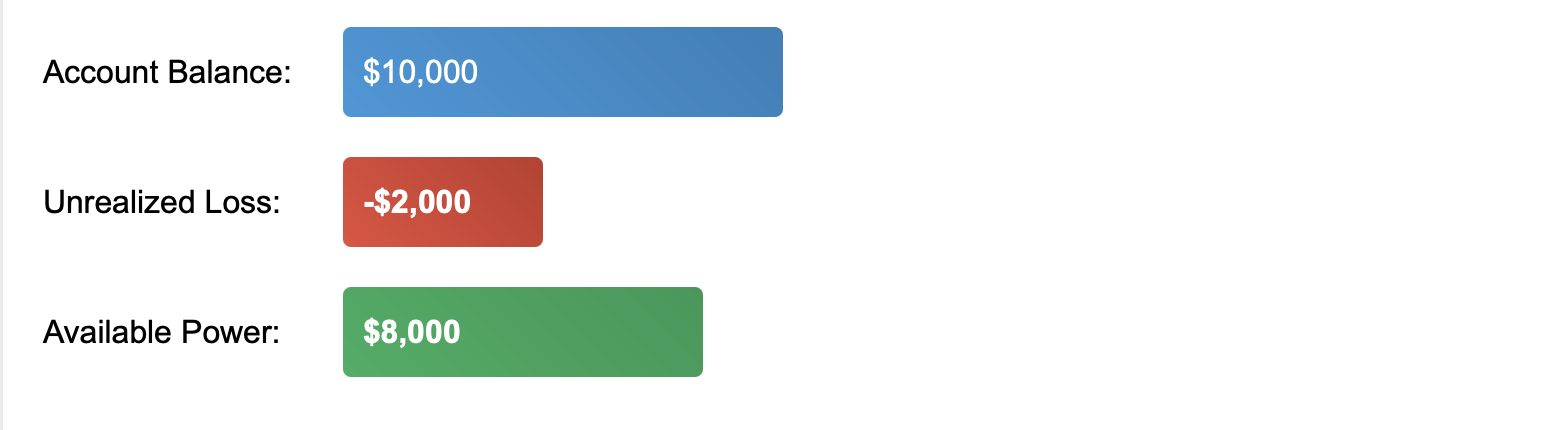
First, it tells you the real exposure of your account. Your account balance could be $10,000, but if your open positions have $2,000 in unrealized losses, it is like having only $8,000 in purchasing power. This is something professional traders are constantly checking in order to make sure they are not overexposing themselves.
Floating P/L also keeps you compliant with your trading plan. If you set a stop-loss at -$500, and you are staring at a -$500 floating P/L, that is your cue to cut your losses. If you want to take profits at +$1,000 and your floating P/L is at +$1,000, that is a concrete place to take profits.

There is also a psychological aspect to floating P/L. If you have unrealized profits, you may be tempted to take profits too soon; if you have open positions in unrealized losses, you may convince yourself to hold on for just a little longer thinking it will go your way. Realizing you have these biases will help you make better, more rational decisions.
When it comes to risk management, floating P/L is essential. If you see unrealized losses accumulating across many positions, you might begin to reduce the sizes of your positions, or consider hedging with additional trades in the opposing direction. On the flip side, if you have strong unrealized profits, it may give you the confidence to let them run, or add to winning positions.
Advanced traders use floating P/L to improve upon their approaches. For example, when unrealized profits build, an advanced trader might elect to trail stop-losses, securing gains while still allowing for further profits.
Professional Calculating Methods
While the basic formula is sufficient for the simplicity of non-CFD trading, professional trading of CFDs require more precision. The full calculating formula is: Floating P/L = (Current Price - Entry Price) x Contract Size x Contract Unit x Currency Conversion (if applicable).
Depending on the product, CFD contracts are structured differently depending on the underlying asset or market. Forex CFDs are typically a standard size of 100,000 units, whereas index CFDs can typically represent $1 per point movement. Commodity CFDs can fluctuate in a wide range of variation. For example, oil can have the contract priced per barrel, or when trading gold, it may be quoted in troy per ounce.
Next, we can walk through a professional example in forex. Let's say you are long 2 standard lots of EUR/USD at 1.2000 and the market price is now at 1.2050. Each pip (0.0001) movement will equal $10 per lot in this example, so your unrealized profit would be 50 pips x $10 x 2 lots = $1000.
Although leverage does influence margin assessments, your P/L calculations remain unaffected. Whether your leverage ratio is 10:1 or 100:1, the unrealized profit amount stays the same no matter how large the trade. Leveraged accounts only affect evaluation of how much money was necessary to open a trade.
In the forex trading scene, traders employ basic heuristics to quickly estimate position size. For instance, they may think about profit in terms of pips per lot. Alternatively, when trading an index CFD, they may simply take points multiplied by contract value. These heuristics are helpful when you are considering larger position size and starting risk management.
Introducing international positions, though, adds an additional consideration - currency conversion. When trading a German DAX CFD, priced in euros, yet being in U.S. dollars you would want to convert unrealized P/L based off the EUR/USD exchange rate that day.
Using Unrealized P/L within Your Trading Strategy
Do not treat your floating unrealized profit and loss as just a number. Make sure you pay attention and leverage the unrealized P/L in your trading strategy. Smart traders leverage unrealized P/L for position sizing, to place stops and to time their exit.
An additional aspect of your trading approach that may factor into your decision making is that once you take into consideration your unrealized P/L, then your position sizing becomes less static. For instance, if you have a +2000 unrealized P/L overall in your portfolio, you may feel inclined, or more comfortable taking a slightly larger position in larger size.
Conversely, you likely should have reduced your overall position sizing at one stage if you were at a -1500 unrealized P/L overall, until your unrealized P/L level returns back to your original unrealized P/L level.
If justified, often stop-loss placement is not altogether based on technical levels, but through your unrealized P/L threshold. For example, you may just exit any position that shows more than 2% unrealized loss regardless of levels of support and resistance.
Profit taking decisions also become more difficult with awareness of floating P/L. Instead of setting rigid profit targets, the trader may elect to incorporate thorough to stop-loss orders that move up as the market moves in their direction but always assure a profit. This can allow for the profitable trade to run while also protecting some of the profits accumulated.
In trend-following techniques, stalking unrealized P/L enables you to stay in winning positions for longer periods of time. As you see profit accumulate steadily, the trend is confirming your choice to remain in the market. The floating P/L can reverse sharply, which usually is an early signal of trend change before price action makes this clear.
Hedging strategies also depend on monitoring unrealized P/L. A trade you are using to hedge may sport unrealized losses, so you may open a position that offsets your original position and limits further losses, and still keep the original position intact.
Real-Time Monitoring Tools
Most modern trading platforms will show you your unrealized P/L very visibly, but it's knowing how to get the best out of these tools that will become important. MetaTrader 4 and 5 will display floating P/L in the Terminal window updating in real-time as you are feeding the prices etc.
Professional platforms like cTrader or platforms that your brokerage provides may have more sophisticated settings and displays for P/L. You may be able to see your unrealized P/L by the individual hedge position, by the currency pair, or by your entire portfolio. Many of them also change the color of profits (green) and losses (red) for quick visual reference.
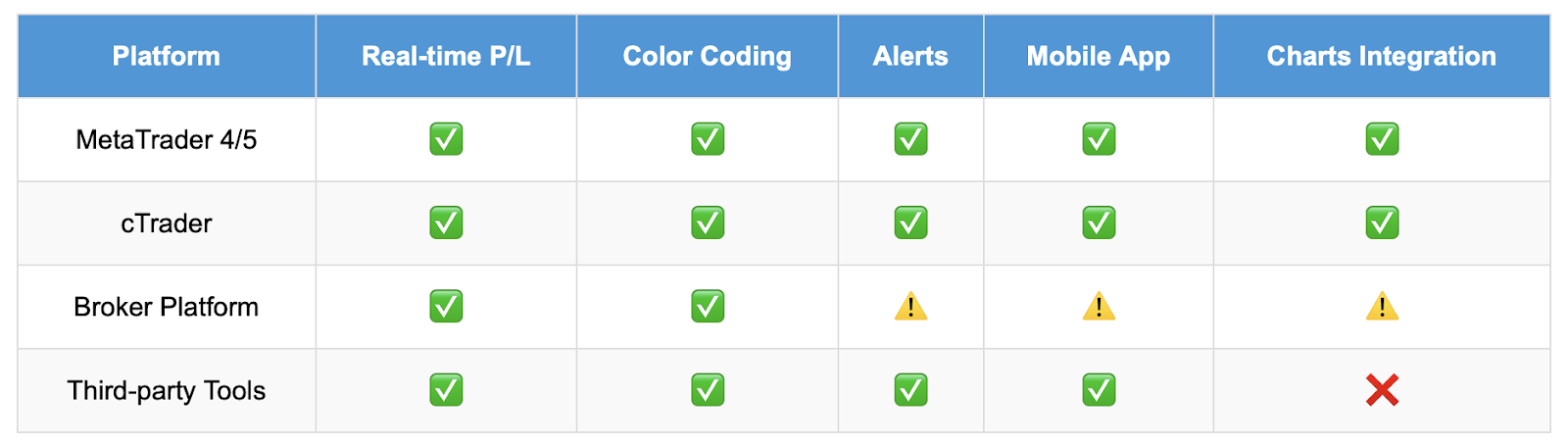
Alert systems are essential for actively monitoring your account. Set alerts for both price levels as well as P/L levels. You might want to get alerts when an individual position crosses (trades for) a -$500 unrealized loss, or when your total portfolio P/L exceeds (+) +$2,000.
An integrated charting solution helps as well. Charts from various platforms will often overlay your average entry price on the chart to allow you to easily see your unrealized P/L at a glance. Executes that show your position size (‘X lots’) often visually indicate how positions P/L (floating P/L) reacts to price movements.
Mobile applications (aka ‘smart devices’) guarantee that you can monitor your unrealized P/L on the go. You could avoid focusing on every ‘wiggle’ in each position, but can remain aware of major moves to assist you in your decisions you can react to significant market moves.
If you’re working with multiple brokers and/or trading platforms, consider using a third-party portfolio tracking tool to aggregate and track your P/L across multiple brokers (one that aggregates P/L easily across multiple brokers etc.), as charting and your broker will only be able to deliver P/L for the individual account / broker.
Common Pitfalls
One of the biggest pitfalls regarding unrealized P/L is thinking of it anywhere like real money. That $1,000 unrealized profit does not belong to you until you are flat in your position. Markets can reverse quickly, and drive paper profits into real P/L losses.
Avoid making financial choices based on unrealized P/L (profit/loss). It's dangerous to regard the unrealized gains as funds available for other investing opportunities or expenses. Thousands of traders have learned this lesson the hard way when the markets experience a crash.
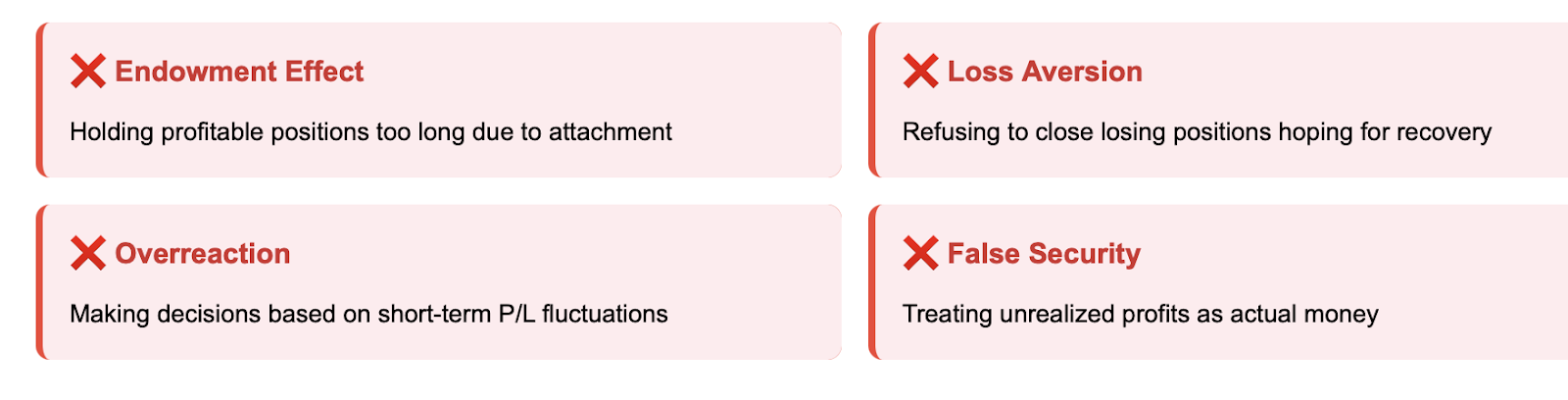
Psychological errors run deep with unrealized P/L. First, the endowment effect influences how we value a position with unrealized profits, especially how we judge the exit. If we see a position moving in our direction, our beliefs about the position become too strong, and we end up staying in the position too long and have our profits disappear before our eyes because we become too attached to the profitable position we "almost had" in that moment.
The opposite relates to loss aversion. We often feel so much pain from an unrealized loss on a position, that we won't close the position, hoping it will come back to break even or to a profit eventually. Too often than not, this experience turns a small loss into a devastating loss, destroying our trading account.
Another mistake traders make is reacting too strongly to unrealized P/L swings in a very short time interval. Intraday volatility of a position's unrealized P/L can swing wildly, but it may not impact the long-term viability of the strategy used in trading the position. Making a decision about a trade minute-by-minute contributes to the poor results traders typically have with over trading.
Misunderstanding leverage is another mistake that can directly be correlated to unrealized P/L. Traders believe higher leverage means they are just wrong when they calculate the unrealized P/L. But the leverage and margin required to carry the position is completely separate from the unrealized amounts being profited or lost.
Leveraging Unrealized P/L in Your Favor
Unrealized profit/loss is not just. a figure on your trading platform, it becomes your glance into the current performance of the markets and your risk exposure. Learning to calculate, track, and interpret floating P/L is your competitive advantage when it comes to trading CFD's.
The important point here is to use unrealized P/L as a tool, but not as a fixation. Monitor your unrealized P/L often enough to understand your risk but be sure to not let anything happen in the short-term guide your emotional responses. As long as you integrate unrealized P/L checks, strong risk management rules, and discipline in your execution, you will be better off.
Professional traders will say that managing unrealized P/L is often more important than deciding on a perfect entry point. Being conscious of what has been realized and unrealized will assist in position sizing, stop placement and exit timing all for better returns.
Remember that unrealized profit and loss are temporary.
The only profit and loss that really matters is what you lock in when you close your position. Use floating profit and loss as a general idea but allow the outcome of your trade plan to dictate the final decision based on your risk management rules.
Do you want to take charge of your CFD trading performance? Find out your unrealized P/L like a real professional today! Open a practice demo account with a reputable CFD broker and begin tracking your floating profits and losses in real-time.
If you master this skill now, you will be poised to trade with confidence when real money is involved.